




What's Happening?
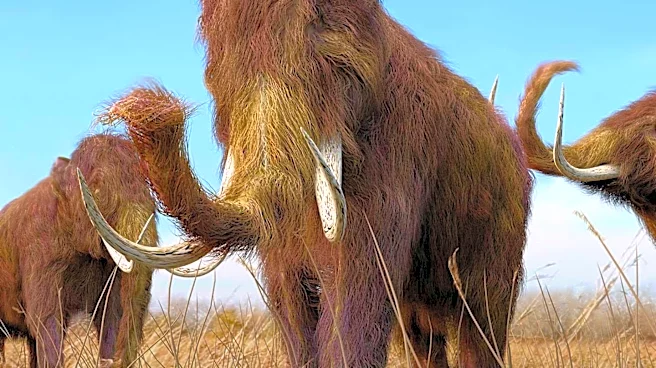
A recent DNA study has revealed that Ice Age hunters in Europe and North America predominantly targeted female mammoths. Researchers analyzed DNA from 521 woolly mammoths, finding that 70% of the mammoths from human-associated sites were female, compared
to 66% male in natural contexts. This suggests that hunters selectively targeted females, possibly due to their herd behavior, which made them easier to track and hunt. The study, published in Current Biology, provides new insights into human hunting practices and their impact on mammoth populations.
Why It's Important?
The study highlights the significant role humans played in the decline of mammoth populations by selectively hunting females, which are crucial for reproduction. This pattern of hunting could have accelerated the species' extinction, as removing breeding females limits population recovery. The findings underscore the broader implications of human activities on wildlife populations, a concern that remains relevant today as modern communities face similar challenges with resource depletion and ecosystem management.
What's Next?
Researchers are continuing to use advanced DNA analysis to further understand ancient human behaviors and their ecological impacts. This study opens new avenues for exploring how ancient hunting practices influenced other species and ecosystems. The findings may also inform current conservation strategies by providing historical context on the consequences of selective hunting and resource management.