









What's Happening?
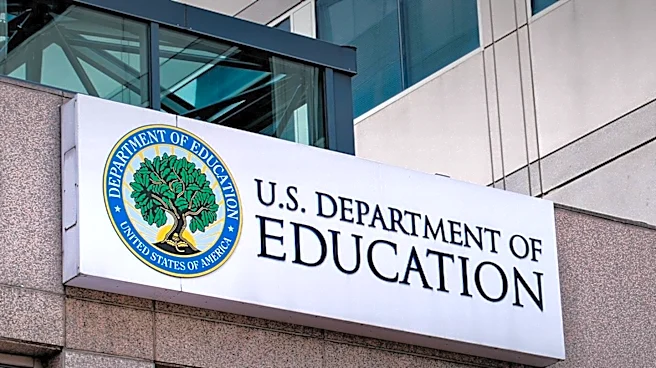
The Department of Education has updated its list of programs eligible for higher student-loan borrowing limits under the Trump administration's new repayment changes. This update includes nearly 30 programs, such as nurse anesthetist and clinical psychology,
which will now qualify for the higher borrowing limit. Previously, theology programs were included, but they have been removed from the updated list. This change follows a recent court decision that blocked the department's professional degree definition from taking effect on July 1, which would have allowed 11 programs to qualify for a $200,000 lifetime borrowing limit, compared to the $100,000 cap for graduate programs. The department's narrower definition had faced criticism for excluding certain programs that require additional funding. The department maintains that the narrowed definition is lawful and will continue to defend it in court.
Why It's Important?
The expansion of programs eligible for higher student-loan limits is significant for students pursuing advanced degrees in fields like nursing and clinical psychology, as it provides them with greater financial flexibility. This change could potentially alleviate financial burdens for students in these programs, allowing them to complete their education without the stress of insufficient funding. However, the exclusion of theology programs and the ongoing legal challenges highlight the contentious nature of defining which programs qualify for higher borrowing limits. The outcome of this legal battle could have lasting implications for educational institutions and students, affecting how they plan and finance their education.
What's Next?
As the legal proceedings continue, the Department of Education's ability to implement its narrowed definition remains uncertain. If the Trump administration prevails in court, the narrower definition could take effect, potentially removing some programs from the higher borrowing cap. This would require schools and students to reassess their financial strategies. The department has stated that the current designations are interim and may change as litigation progresses. Stakeholders, including educational institutions and student advocacy groups, will likely continue to monitor the situation closely and may engage in further legal or policy advocacy to influence the final outcome.