




What's Happening?
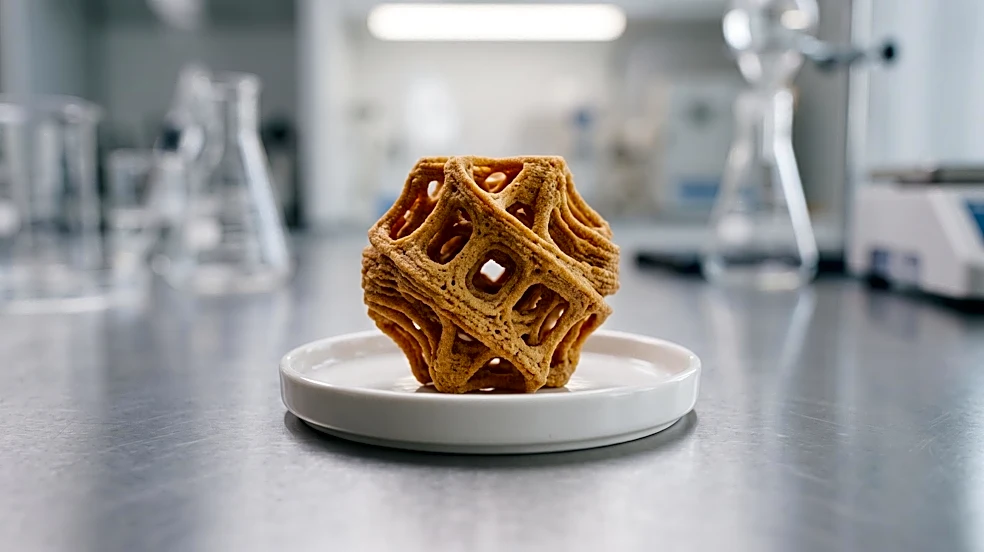
Researchers at Southern Illinois University Carbondale have developed 'µBites,' a 3D-printed cookie designed for space travel, which utilizes yeast to transform plastic and agricultural waste into edible, protein-rich food. This project, funded by NASA’s
Deep Space Food Challenge, aims to provide sustainable food solutions for resource-limited missions. The concept involves a biological transformation process, where yeast converts waste materials into food, rather than simply incorporating shredded plastic into edibles. While the project addresses the formidable circular-design proposition of converting waste into sustenance, the reporting emphasizes that resource efficiency alone does not guarantee safety for human consumption. The design challenge lies in making this transformation intelligible, ensuring safeguards are inspectable, and making the decision to consume genuinely voluntary. The use of a cookie format is intended to offer familiarity and manageable portions, but it should not obscure the extraordinary production pathway.
Why It's Important?
This innovation holds significant implications for future U.S. space missions and potentially for terrestrial food production. For NASA, it represents a crucial step towards achieving long-duration space travel by addressing the challenges of limited resources, waste management, and nutritional needs in isolated environments. The ability to convert waste into food could drastically reduce the logistical burden and cost of resupplying missions. On Earth, this research could pave the way for novel approaches to food security and waste reduction, particularly in regions facing resource scarcity or environmental challenges. It highlights the potential of biotechnology and circular economy principles to create sustainable food systems. However, the importance also lies in the rigorous scientific and regulatory scrutiny required to ensure the safety and nutritional adequacy of such unconventional food sources, setting precedents for future food innovations derived from waste materials.
What's Next?
The immediate next steps for µBites involve further research and development to thoroughly validate its safety, nutritional content, and palatability. This includes detailed analysis of the specific plastics and agricultural residues used, the preparation processes before biological conversion, and the purification steps to ensure the absence of unwanted compounds. The project will need to move beyond research funding to seek regulatory authorization for food products, which will involve extensive testing for digestibility, nutritional claims, and appropriate serving levels. Public communication will be critical, requiring transparent disclosure of the production process, evaluation status, and any remaining uncertainties. While currently focused on space travel, the long-term vision could involve exploring commercial applications on Earth, which would necessitate navigating different regulatory pathways and addressing consumer acceptance challenges.
Beyond the Headlines
Beyond its immediate application in space travel, the µBites project raises profound ethical, legal, and cultural questions about the future of food. Ethically, it challenges our traditional definitions of what constitutes 'food' and prompts discussions about the acceptability of consuming materials derived from waste. Legally, it will necessitate the development of new regulatory frameworks for novel food products, particularly those involving biological transformation of non-traditional feedstocks. This could involve establishing new standards for safety, labeling, and consumer information. Culturally, the concept of eating plastic-derived food could trigger significant public debate and require careful communication to build trust and overcome potential aversion. It also highlights the broader societal shift towards circular economy models, where waste is viewed as a resource, and innovation is driven by the need to minimize environmental impact. The project serves as a powerful example of how design and science can intersect to address complex challenges, pushing the boundaries of what is considered possible in sustainable living.