
What's Happening?
Japan and South Korea scrambled fighter jets in response to a joint Chinese-Russian bomber patrol over international waters near their territories. The patrol, part of an annual bilateral exercise, involved
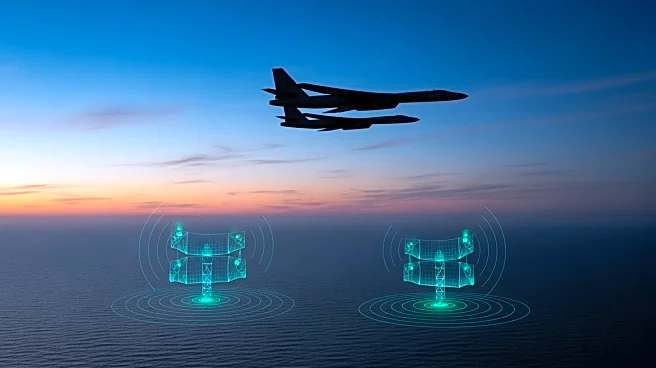
two Russian Tu-95 bombers and two Chinese H-6 bombers, accompanied by Chinese J-16 fighters. The patrol flew from the Sea of Japan into the East China Sea and the Pacific Ocean, prompting Japan and South Korea to deploy their air defense forces. This exercise occurs amid heightened tensions between China and Japan, particularly over Japan's support for Taiwan. The incident follows a recent radar lock incident involving Chinese and Japanese fighter jets near Okinawa.
Why It's Important?
The joint bomber patrol highlights the increasing military cooperation between China and Russia, which poses a strategic challenge to regional security dynamics. The exercise underscores the growing military assertiveness of both nations, particularly in response to perceived threats from U.S. allies in the region. The patrol also reflects the ongoing tensions between China and Japan, exacerbated by Japan's military enhancements and its stance on Taiwan. This development could lead to further militarization in the region and impact diplomatic relations among the involved countries.
What's Next?
The joint patrol is expected to continue as part of the annual exercises, with potential for increased frequency and scale. The ongoing military cooperation between China and Russia may prompt Japan and South Korea to enhance their defense capabilities and seek stronger alliances with the U.S. and other regional partners. The situation could also lead to diplomatic engagements aimed at de-escalating tensions and establishing clearer communication channels to prevent accidental conflicts.