








What's Happening?
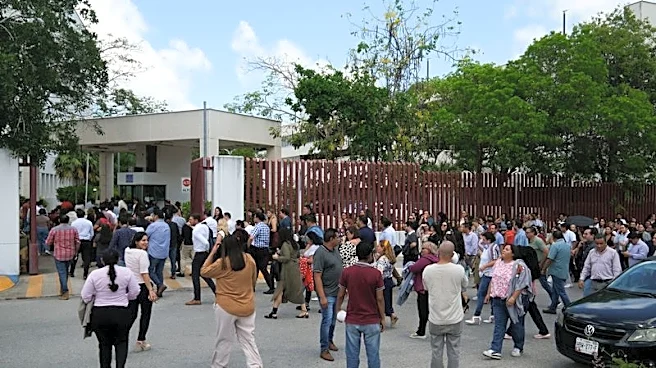
A 6.1-magnitude earthquake centered off the western tip of Cuba was felt across south Florida on Monday. The tremor, which occurred in the afternoon, led to the evacuation of several buildings in Miami-Dade County, including a 28-story government building.
Commuter train services in the area were temporarily halted as a precaution. Residents and workers as far north as Orlando reported feeling the vibrations, which lasted about a minute. Despite the widespread sensation of the quake, no injuries or damage were reported, and there was no tsunami threat, according to the Miami Herald. The U.S. Geological Survey notes that the Caribbean region has experienced significant earthquakes historically, though few have exceeded a magnitude of 7.5.
Why It's Important?
The earthquake serves as a reminder of the potential seismic risks in regions not typically associated with such events, like Florida. While the state is considered low-risk for earthquake losses, the incident highlights the importance of preparedness and the potential need for earthquake insurance, even in areas primarily concerned with hurricane threats. The Insurance Information Institute reports that premiums for earthquake insurance in low-risk areas can vary, emphasizing the need for residents to consider such coverage. The event also underscores the interconnectedness of natural disasters across regions, as seismic activity in the Caribbean can have tangible effects in the southeastern United States.
What's Next?
In the aftermath of the earthquake, local authorities and residents may reassess their preparedness for such events. This could lead to increased interest in earthquake insurance and a review of building codes and emergency response plans. Additionally, the incident may prompt further studies into the seismic activity of the Caribbean region and its potential impact on nearby areas, including Florida. Stakeholders such as government agencies, insurance companies, and residents will likely engage in discussions on how to mitigate risks and enhance safety measures.