





What's Happening?
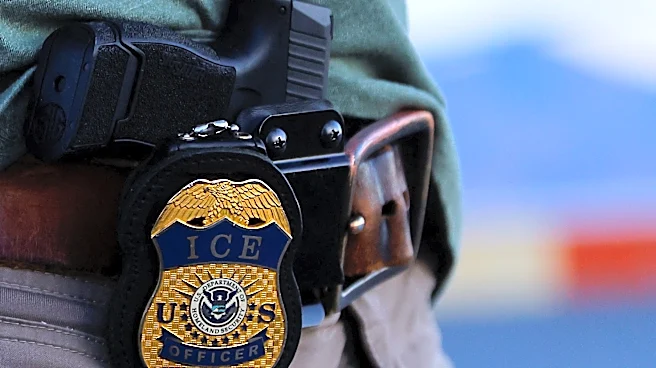
A memorial in Houston's East End has become a focal point for community expression and voter engagement following the death of Lorenzo Salgado Araujo, who was fatally shot by an Immigration and Customs Enforcement (ICE) agent in July. The memorial, adorned
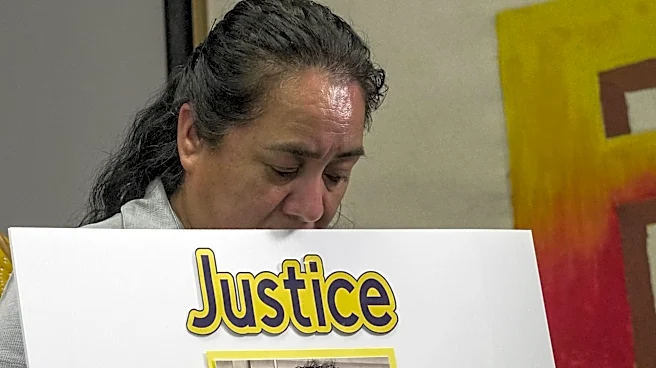
with 'I Voted' stickers, carries the message 'Somos Lorenzo' ('We are Lorenzo') and serves as a tribute to Salgado Araujo. The initiative began on October 19, the first day of early voting in Texas, when Salgado Araujo's son, Ronaldo Salgado, placed his own sticker on the memorial. Since then, over a thousand people have contributed their stickers, transforming the site into a gathering place for those seeking to honor Salgado Araujo and voice concerns about immigration authorities' actions. The Department of Homeland Security (DHS) claims the agent fired after Salgado Araujo allegedly attempted to run over an officer with his truck, a claim that has led to community demands for transparency.
Why It's Important?
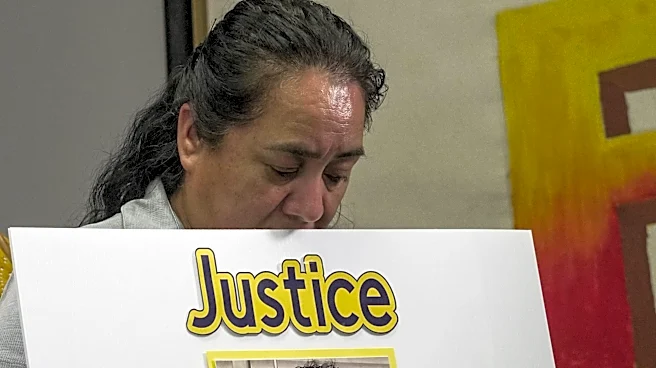
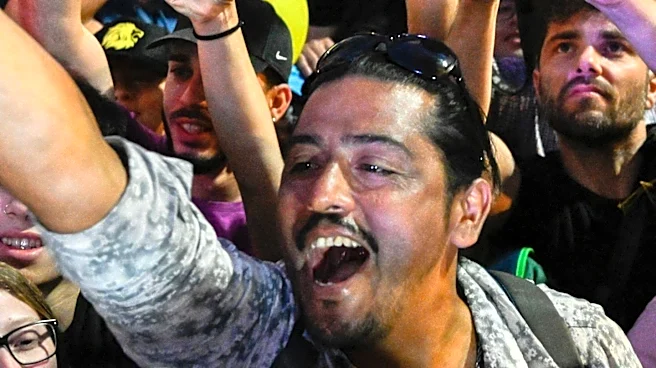
The memorial for Lorenzo Salgado Araujo highlights significant community discontent and a call for political action in Houston's East End, a historically immigrant-rich and predominantly Latino neighborhood. The increased voter participation observed in this area during the early voting period, with a 15.7 percent rise in votes compared to the 2018 midterm elections, suggests that the incident has mobilized residents. This surge in voting reflects a broader sentiment among community members who feel personally affected by immigration enforcement actions, with many expressing that Salgado Araujo's death could have happened to their own family members. The memorial has become a symbol of collective grief and a platform for advocating for justice and accountability from federal agencies like ICE, underscoring the profound impact of such incidents on local political engagement and community solidarity.
What's Next?
The ongoing memorial and community activism in Houston's East End are likely to sustain pressure on local and federal authorities regarding the investigation into Lorenzo Salgado Araujo's death. The increased voter turnout in the area suggests that immigration policies and accountability for law enforcement actions will remain key issues for constituents, potentially influencing local and state elections. Community leaders and activists will likely continue to demand transparency from the DHS and ICE regarding the circumstances of the shooting. Furthermore, the sentiment encapsulated by 'Vota por los que no pueden' ('Vote for those who cannot') indicates a sustained effort to mobilize voters, particularly within immigrant communities, to elect representatives who may advocate for reforms in immigration enforcement and greater oversight of federal agencies. This could lead to continued advocacy for policy changes at various governmental levels.
Beyond the Headlines
The memorial for Lorenzo Salgado Araujo transcends a simple act of remembrance, evolving into a powerful symbol of collective identity and political agency within the immigrant community. It underscores the deep-seated fears and anxieties experienced by many residents regarding immigration enforcement, transforming personal tragedy into a catalyst for broader social and political mobilization. The act of placing 'I Voted' stickers on the memorial signifies a direct link between personal grief and civic duty, illustrating how community trauma can galvanize political participation. This movement highlights the ethical dimensions of state power and accountability, particularly when it intersects with vulnerable populations. It also reflects a cultural assertion of presence and voice, where a community uses a memorial not just to mourn, but to demand justice and assert its collective power in the democratic process, potentially fostering long-term shifts in local political engagement and advocacy for immigrant rights.