




What's Happening?
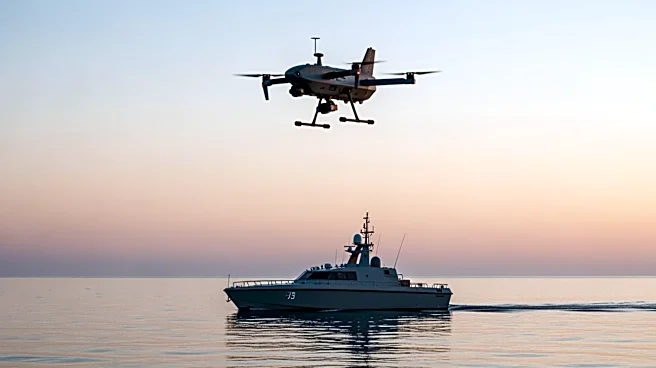
In a groundbreaking test, U.S. Marines and Naval Special Warfare operators successfully launched a first-person view (FPV) drone from a naval craft to strike an unmanned vessel in the Pacific. This test, conducted by the III Marine Expeditionary Force's
Expeditionary Operations Training Group off the coast of Okinawa, Japan, marks a significant advancement in the Marines' capabilities to engage hostile maritime targets using innovative technology. The unmanned surface vessel was designed by the Marines themselves and was destroyed during the test, showcasing the potential for Marines to fabricate and deploy unmanned systems tailored to specific battlefield needs. This development is part of a broader effort by the Marine Corps to enhance its small unmanned aerial systems capabilities, which includes purchasing thousands of FPV systems and establishing certification programs.
Why It's Important?
This successful test underscores the growing importance of unmanned systems in modern military operations, particularly in contested environments like the Pacific. The ability to deploy drones from naval craft to engage targets enhances the operational flexibility and lethality of U.S. forces. This capability is crucial as the U.S. military anticipates potential conflicts in the Pacific, where supply lines and logistics nodes could be targeted. The test also highlights the Marines' focus on innovation and adaptability, preparing them to build and utilize unmanned systems from local resources during conflicts. This approach aligns with the Pentagon's emphasis on distributed operations in austere environments, ensuring that U.S. forces remain resilient and effective in future engagements.
What's Next?
The Marine Corps is expected to continue expanding its unmanned systems capabilities, with plans to purchase more FPV systems and further develop training programs. The success of this test may lead to similar initiatives across other branches of the military, enhancing the overall drone capabilities of the U.S. armed forces. Additionally, the focus on using local resources to build unmanned systems during conflicts could become a standard practice, ensuring that U.S. forces can sustain operations even in resource-constrained environments. As tensions in the Pacific region persist, the ability to rapidly deploy and adapt unmanned systems will be a critical component of U.S. military strategy.