



What's Happening?
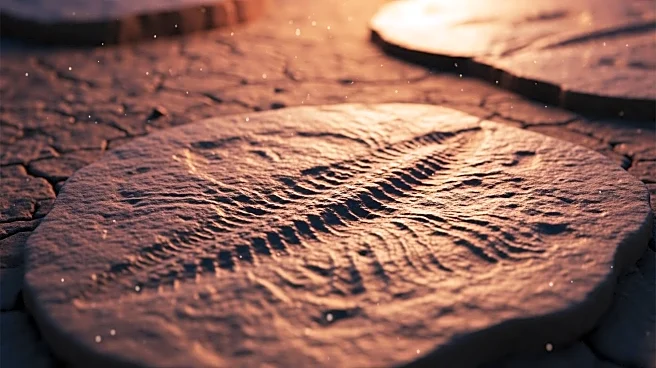
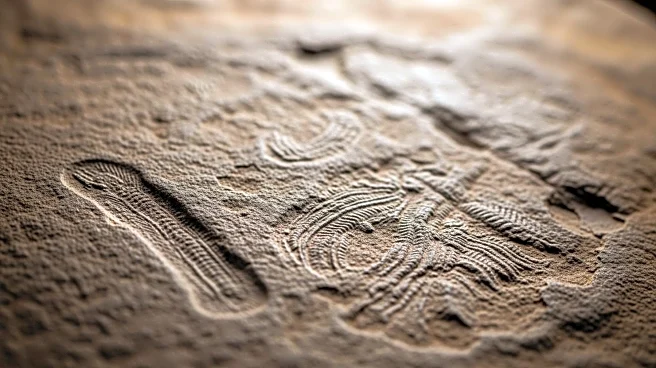
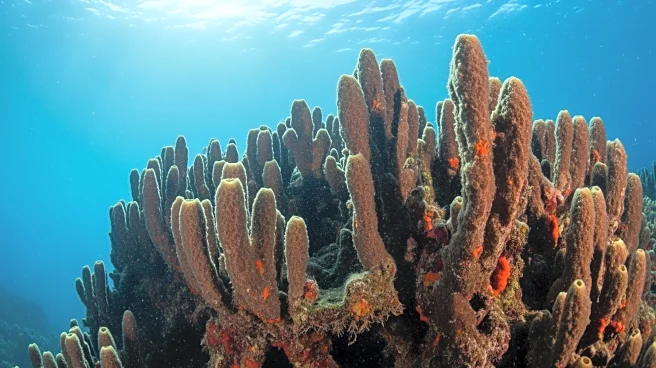
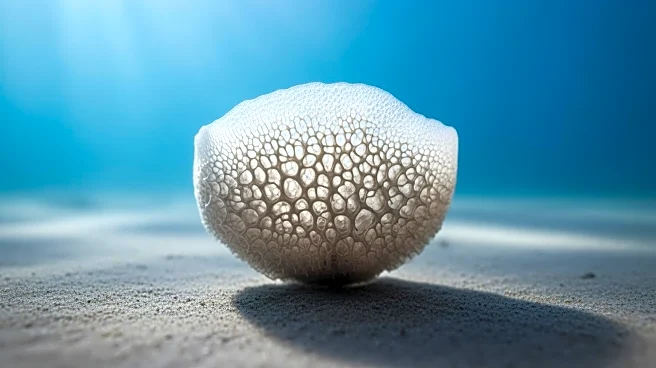
Researchers at MIT have discovered chemical evidence suggesting that Earth's earliest animals were likely ancient sea sponges. The study, published in the Proceedings of the National Academy of Sciences, identifies 'chemical fossils' in rocks over 541
million years old. These fossils are traces of steranes, stable remnants of sterols, linked to demosponges, a major group of sea sponges. The findings build on a 2009 study and suggest that sponges existed long before the Cambrian explosion, potentially being among the planet's earliest animals.
Why It's Important?
This discovery provides crucial insights into the early evolution of life on Earth, challenging previous assumptions about the timeline of animal evolution. Understanding the origins of complex life forms can inform current biological and ecological studies, offering a deeper comprehension of biodiversity and evolutionary processes. The research also underscores the importance of chemical analysis in paleontology, opening new avenues for exploring ancient life forms and their environments.
What's Next?
The research team plans to examine rocks from other parts of the world to further investigate the presence of ancient sponges during the Ediacaran Period. By expanding their study, they aim to pinpoint more precisely when some of the earliest animals first emerged. This ongoing research could lead to new discoveries about the conditions and factors that facilitated the evolution of early life on Earth.