






What's Happening?
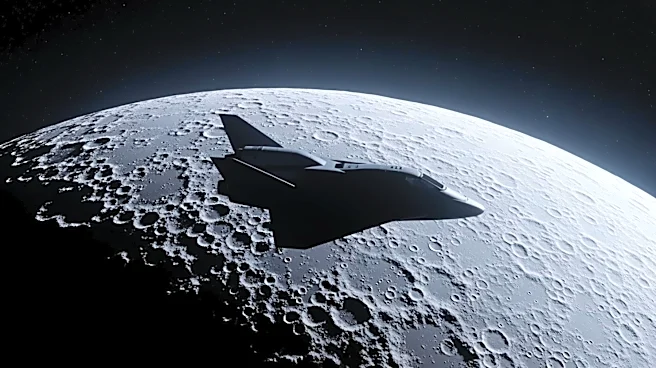
The Artemis II mission, consisting of four astronauts, has successfully completed a lunar flyby, setting a new distance record for human space travel. The crew, which includes three Americans and one Canadian, surpassed the previous record set by Apollo
13 in 1970 by traveling 252,756 miles from Earth. During the mission, the astronauts observed the far side of the moon, capturing images and making observations. The mission marks NASA's first return to the moon since the Apollo era, with plans to land near the moon's south pole in two years.
Why It's Important?
This mission is a significant milestone in NASA's Artemis program, which aims to return humans to the moon and eventually establish a sustainable presence. By surpassing the Apollo 13 distance record, Artemis II demonstrates advancements in space travel technology and capabilities. The mission's success paves the way for future lunar landings and exploration, potentially leading to new scientific discoveries and technological innovations. It also reinforces international collaboration in space exploration, with Canadian astronaut Jeremy Hansen participating in the mission.
What's Next?
Following the successful lunar flyby, the Artemis II crew is set to return to Earth, with a splashdown in the Pacific Ocean scheduled for Friday. The mission's completion will provide valuable data and experience for the upcoming Artemis III mission, which will involve docking with lunar landers in orbit around Earth. The ultimate goal is to land astronauts near the moon's south pole by 2028, furthering human exploration and scientific research on the lunar surface.