






What's Happening?
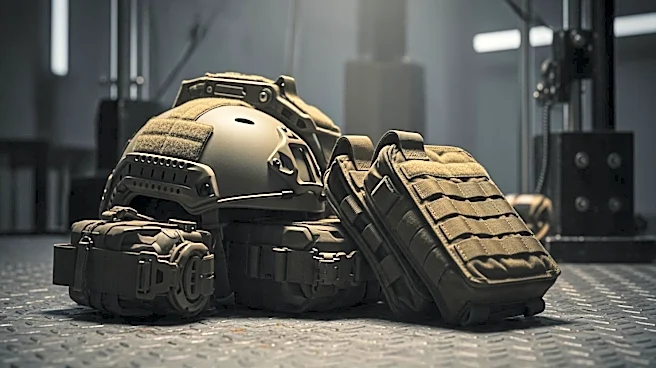
The U.S. Army Natick Soldier Systems Center in Massachusetts is at the forefront of developing advanced military gear and food to enhance soldier performance. Established in 1954, the facility conducts rigorous experiments to test the limits of equipment
and human endurance. The lab's research spans various areas, including clothing, food, and human performance, with a focus on improving safety and efficiency in combat scenarios. For instance, uniforms are tested for their resistance to flash fires, and low-oxygen environments are simulated to study the effects on memory and alertness. The center also explores the impact of sleep deprivation and physical strain on cognitive functions. A notable feature of the facility is its virtual reality simulator, which immerses soldiers in live-fire scenarios to track decision-making and provide immediate feedback through physical stimuli.
Why It's Important?
The innovations at the Natick Soldier Systems Center are crucial for enhancing the safety and effectiveness of U.S. military personnel. By developing lighter and more resilient gear, the lab addresses the physical strain soldiers face, particularly with modern equipment like night-vision devices. The research on cognitive functions under stress and fatigue is vital for maintaining high performance in challenging environments. These advancements not only improve individual soldier capabilities but also contribute to overall mission success. The lab's work reflects a broader military strategy to leverage technology and research for superior combat readiness, potentially giving the U.S. military a strategic advantage in future conflicts.
What's Next?
The ongoing research at the Natick lab is expected to continue evolving with advancements in technology and changing military needs. Future developments may include more sophisticated virtual reality training systems and further enhancements in gear materials to reduce weight and increase durability. The lab's findings could influence military procurement decisions and training protocols, ensuring that soldiers are equipped with the best possible tools and knowledge. As global military dynamics shift, the lab's innovations will likely play a key role in adapting U.S. military strategies to new challenges.