






What's Happening?
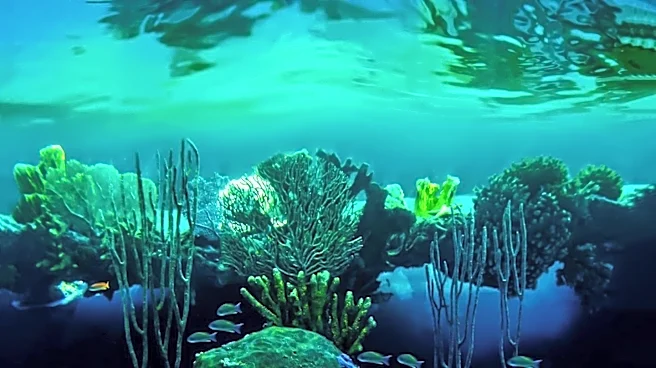
A coral reef, long presumed dead, has been rediscovered off the coast of West Africa, teeming with life. Researchers from the Institute of Halieutic and Oceanographic Research in Cotonou, Benin, led by Gérard Zinzindohoué, used modern sonar and underwater
drones to locate the thriving ecosystem in the Gulf of Guinea. Historical surveys from the 1960s had identified a possible deep-water coral reef but assumed it was dead. The recent discovery revealed a mesophotic coral ecosystem, which lives in deeper, low-light zones, and is not a continuous structure but rather patches of coral. The reef hosts eight different types of coral and various fish species, including golden African snappers and Guinean angelfish. This finding marks the first confirmed record of a living mesophotic coral ecosystem on the Gulf of Guinea continental shelf.
Why It's Important?
The rediscovery of the coral reef underscores the potential for other undocumented ecosystems in coastal regions of West Africa and beyond. This finding challenges previous assumptions about the reef's status and highlights the need for further exploration and documentation of marine ecosystems. The presence of a healthy reef could have significant implications for biodiversity conservation and marine research. It also emphasizes the importance of using modern technology in ecological studies, which can lead to new discoveries and a better understanding of marine environments. The discovery could inspire further research and conservation efforts, potentially leading to the protection of similar ecosystems that may still be undocumented.
What's Next?
Further research is needed to explore the extent of the reef and other potential coral systems in the area. The research team plans to conduct more comprehensive surveys and sampling to confirm species identifications and understand the reef's history. This could involve scientific diving and a detailed sampling program to gather more data. The findings could inform conservation strategies and policies aimed at protecting marine biodiversity in the region. Additionally, the discovery may prompt similar explorations in other under-researched coastal areas, potentially leading to more significant ecological findings.