


What's Happening?
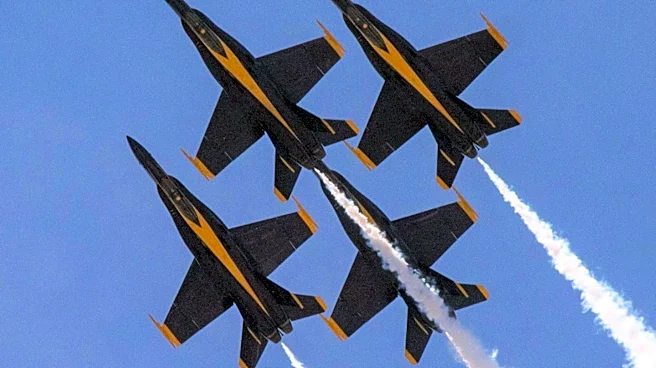
Marine Maj. Scott Laux, 37, a pilot with the Pensacola-based Blue Angels stunt squadron, has been removed from the elite Navy team. The removal was due to his failure to uphold the standards expected of members of the Navy Flight Demonstration Squadron.
Following his dismissal, Laux's biography and photo were removed from the official Blue Angels website. The Chief of Naval Air Training public affairs office confirmed his removal, stating he would not participate in the team's remaining performances for the season. The Navy has not provided further explanation for Laux's dismissal. Laux was notably absent from the squadron's NAS Pensacola Homecoming Air Show, where the Blue Angels flew five planes instead of their usual six. Reports also indicate that a profile for Marine Capt. Danielle Cribb, whom Laux described as his mentor, was also removed from the website.
Why It's Important?
The removal of a pilot from the Blue Angels, a highly visible and prestigious Navy flight demonstration squadron, underscores the stringent conduct and performance standards expected of its members. This incident could impact public perception of the squadron, which serves as a key recruitment and public relations tool for the U.S. Navy. The Blue Angels represent the pinnacle of naval aviation skill and discipline, and any deviation from their established standards can reflect on the broader military. For the Navy, maintaining the integrity and reputation of such an iconic team is crucial for morale, recruitment efforts, and projecting a positive image to both domestic and international audiences. The lack of detailed explanation for the dismissal may lead to speculation, potentially affecting trust and transparency within military operations.
What's Next?
Following Maj. Laux's removal, the Blue Angels will continue their performance schedule, likely with a modified formation as seen at the NAS Pensacola Homecoming Air Show, where they flew with five planes instead of six. The Navy may need to address the public's questions regarding the incident, even without disclosing specific details, to manage public relations and maintain confidence in the squadron. Internally, the incident could prompt a review of the selection and monitoring processes for Blue Angels pilots to ensure adherence to the high standards. The absence of a detailed explanation for the dismissal leaves room for ongoing speculation, which the Navy may choose to counter with general statements about upholding military values and standards.
Beyond the Headlines
This event highlights the immense pressure and scrutiny faced by individuals in high-profile military roles, particularly those representing the U.S. armed forces to the public. The Blue Angels are not just pilots; they are ambassadors, and their conduct, both on and off duty, is expected to be exemplary. The swift removal and the immediate deletion of online profiles suggest a zero-tolerance policy for failing to meet these standards. This incident could serve as a reminder across all branches of the military about the importance of personal conduct and the potential consequences for actions that do not align with military values, regardless of rank or achievement. It also subtly touches upon the broader implications of social media presence for military personnel, especially when personal and professional lives intersect in the public eye.