








What's Happening?
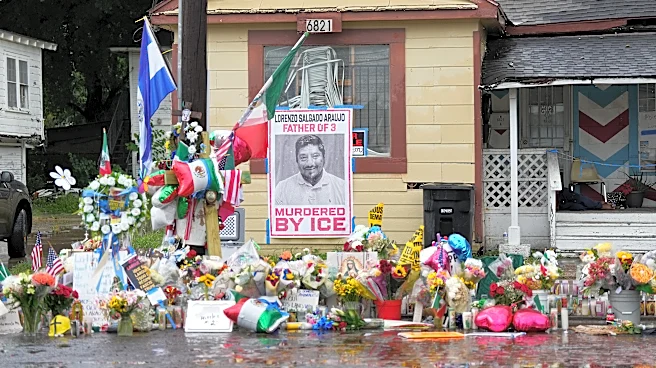
A substance found in the work van of Lorenzo Salgado Araujo, a Mexican immigrant fatally shot by an Immigration and Customs Enforcement (ICE) agent, has tested negative for illicit drugs, according to the Harris County District Attorney's office. This
development contradicts earlier federal claims that the vehicle likely contained methamphetamine. Salgado Araujo, a construction worker who had lived in the U.S. for 35 years, was shot by an ICE officer in Houston on July 7. ICE alleged that Salgado Araujo 'weaponized' his vehicle during a traffic stop, prompting the shooting in self-defense. However, the other men in the van, who remain in ICE custody, have disputed this claim. The FBI had previously submitted an affidavit suggesting the presence of meth based on photos of small bags with a white crystal-like substance. The recent test results, however, align with the Salgado family's assertion that the substance was likely granulated salt used for a homemade electrolyte mix.
Why It's Important?
This case highlights significant issues regarding the use of force by ICE agents and the narratives constructed around such incidents. The negative test results for drugs challenge the initial justification for the shooting, potentially impacting public perception and trust in federal law enforcement agencies. The incident has drawn attention to the broader debate over immigration enforcement practices and the treatment of undocumented immigrants in the U.S. The outcome of ongoing investigations could influence future policies and procedures within ICE and other federal agencies, affecting how similar cases are handled and perceived by the public.
What's Next?
The FBI and ICE's internal oversight office are reviewing the shooting, with the Harris County District Attorney's office conducting its own investigation. District Attorney Sean Teare has expressed readiness to prosecute ICE agents if criminal wrongdoing is found. The case may lead to increased scrutiny of ICE's operations and potentially prompt calls for policy reforms. Advocacy groups, such as the ACLU of Texas, are likely to continue pushing for accountability and transparency in the investigation process. The outcome could have implications for future interactions between law enforcement and immigrant communities.