




What's Happening?
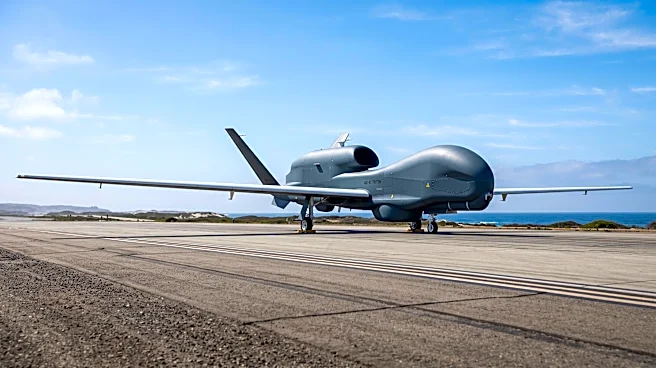
Northrop Grumman has been awarded a nearly $56 million contract modification by Naval Air Systems Command to upgrade a single U.S. Navy MQ-4C Triton maritime surveillance drone. The contract, awarded on October 28 without competition, covers the installation
of a B7 retrofit material kit. The work is scheduled to be completed by May 2030. The majority of the work, 64%, will be performed in Palmdale, California, where Triton aircraft are manufactured, with an additional 34% in San Diego, and the remaining 2% across other U.S. locations. The Navy has not disclosed specific details about the equipment, software, or capabilities that this upgrade will introduce, nor has it confirmed if this installation will bring the aircraft to the Integrated Functional Capability 4 (IFC-4) standard, which includes signals intelligence capabilities.
Why It's Important?
This contract highlights the ongoing investment by the U.S. Navy in enhancing its maritime surveillance capabilities through advanced unmanned systems. The MQ-4C Triton, based on the RQ-4 Global Hawk, is crucial for long-endurance intelligence, surveillance, and reconnaissance (ISR) missions. Upgrades to these drones ensure the U.S. maintains a technological edge in naval operations, particularly in monitoring vast ocean areas. The undisclosed nature of the upgrade details suggests sensitive advancements, potentially related to signals intelligence (SIGINT) capabilities, which would significantly bolster the Triton's ability to detect and track adversary activities. For Northrop Grumman, this contract reinforces its position as a key defense contractor and a leader in unmanned aerial systems, securing future revenue and employment in its California facilities.
What's Next?
The upgrade work on the MQ-4C Triton drone is slated for completion by May 2030. While the specific capabilities of the B7 retrofit kit remain undisclosed, future announcements or operational deployments may shed light on the enhancements. The Navy's continued investment in the Triton program, as evidenced by this contract and previous orders for engineering changes, indicates a long-term commitment to this platform. Further contracts for additional Triton upgrades or maintenance are likely as the fleet matures and new technological advancements become available. The ongoing development and integration of advanced capabilities, such as IFC-4, will be critical for the Triton's role in future U.S. naval strategy.
Beyond the Headlines
The continuous modernization of platforms like the MQ-4C Triton reflects a broader strategic shift towards integrating advanced autonomous systems into national defense. The emphasis on signals intelligence capabilities, even if not explicitly confirmed for this specific upgrade, points to the increasing importance of electronic warfare and data collection in contemporary military operations. This trend raises questions about the ethical implications of autonomous surveillance, data privacy, and the potential for escalation in geopolitical tensions. Furthermore, the long-term nature of these contracts underscores the symbiotic relationship between the defense industry and national security, where technological innovation by companies like Northrop Grumman directly influences the operational capabilities and strategic posture of the U.S. military.