
What's Happening?
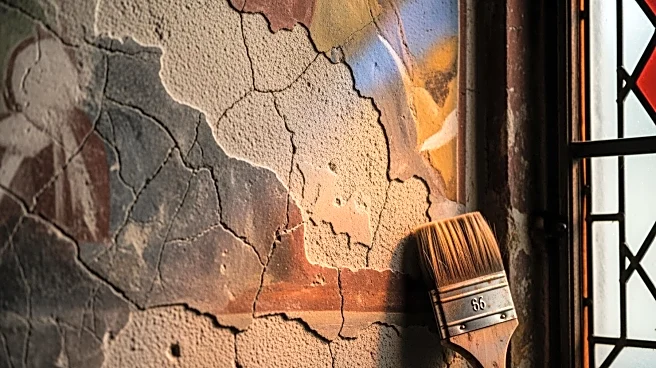
An Italian volunteer restorer, Bruno Valentinetti, is under investigation for allegedly painting the face of Italy's Prime Minister Giorgia Meloni into a fresco in the Basilica of San Lorenzo in Lucina,
Rome. The fresco, which was damaged by water in 2023, features a bust of Italy's last king, Umberto II, flanked by two angels. The angel on the right, holding a map of Italy, reportedly resembles Meloni. Valentinetti, who worked on the restoration for two years, denies altering the original design, claiming he followed the original lines. The Italian state authority for cultural heritage and the Diocese of Rome have launched investigations to determine if any unauthorized changes were made. The basilica's pastor, Monsignor Daniele Micheletti, acknowledged the resemblance but emphasized that the restoration was meant to replicate the original artwork.
Why It's Important?
This incident has sparked a debate about the intersection of art, politics, and cultural heritage. If the likeness to Prime Minister Meloni is confirmed, it could raise concerns about the use of religious and cultural symbols for political purposes. The controversy highlights the importance of preserving historical artworks without modern political influences. The investigation's outcome could set a precedent for how contemporary restorations are managed and monitored, especially in culturally significant sites. Additionally, the case underscores the challenges faced by cultural institutions in maintaining the integrity of historical art in the face of potential political manipulation.
What's Next?
The ongoing investigations by Italy's cultural heritage authority and the Diocese of Rome will determine whether the fresco was altered to include Meloni's likeness. If changes are confirmed, the artwork may be restored to its original state, and those responsible could face penalties. The findings could influence future restoration projects and the protocols governing them. Public and political reactions are likely to continue, with potential implications for how cultural heritage is protected from political influences. The case may also prompt discussions on the legal frameworks surrounding the restoration of contemporary artworks.
Beyond the Headlines
The controversy touches on broader issues of artistic freedom and the role of art in society. It raises questions about the ethical responsibilities of restorers and the potential for art to be co-opted for political messaging. The incident may lead to increased scrutiny of restoration practices and the qualifications of those involved in preserving cultural heritage. It also highlights the delicate balance between maintaining historical authenticity and allowing for artistic interpretation in restoration work.