



What's Happening?
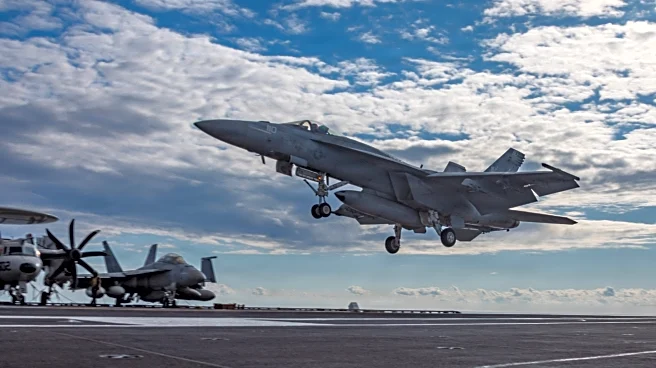
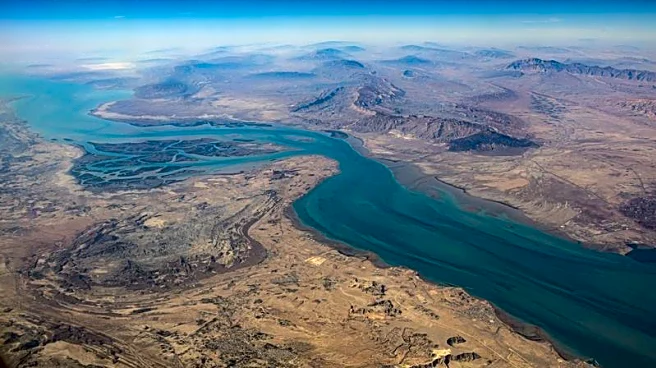
Saudi Arabia's state oil company, Aramco, is rerouting some of its crude exports to the Red Sea to avoid the Strait of Hormuz due to heightened risks of Iranian attacks. This strategic move comes after the U.S. and Israel launched attacks on Iran, leading
to a significant slowdown in shipping through the Strait. As a result, global oil benchmark Brent crude futures have surged by 12% this week. Saudi Aramco aims to maintain production levels by utilizing the East-West Pipeline, which can transport oil from eastern oilfields to the Red Sea port of Yanbu. However, there are concerns about Yanbu's capacity to handle the increased load, as well as potential threats from Iranian allies in Yemen.
Why It's Important?
The rerouting of oil exports by Saudi Aramco highlights the geopolitical tensions affecting global oil supply chains. The Strait of Hormuz is a critical chokepoint for oil transportation, and disruptions there can have significant implications for global energy markets. The increased tanker rates and potential supply shortages underscore the vulnerability of oil-dependent economies, particularly in Asia. This situation may prompt countries to seek alternative energy sources or routes, impacting global trade dynamics and energy security strategies.
What's Next?
The ongoing tensions in the region could lead to further disruptions in oil transportation, prompting countries and companies to explore alternative routes and sources. The situation may also lead to increased diplomatic efforts to de-escalate tensions and ensure the security of vital shipping lanes. Additionally, the global oil market may experience volatility as stakeholders react to developments in the region.