







What's Happening?
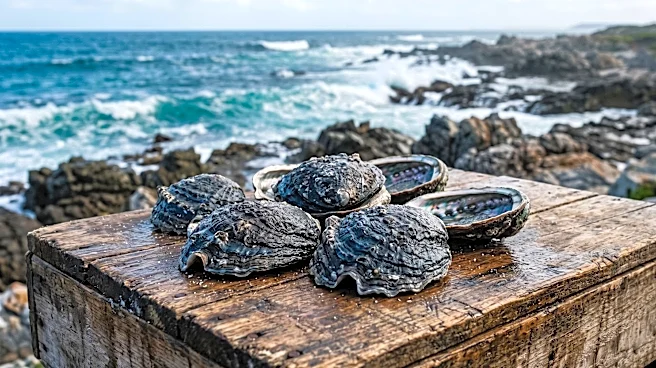
The South African Police Service (SAPS) in Nelson Mandela Bay and the broader Eastern Cape have significantly ramped up their operations against the illegal perlemoen (abalone) trade. This intensified effort, part of Operation Ukubuza launched in April
2026, has led to multiple arrests and the recovery of over a tonne of perlemoen, valued at approximately R2.3-million, in November alone. Police spokesperson Brigadier Nobuntu Gantana stated that these are not isolated incidents but part of sustained, intelligence-driven efforts to disrupt the illegal supply chain. Detectives are actively investigating potential links between cases, focusing on the 'modus operandi,' routes used, and equipment seized by criminal organizations. Recent busts include a high-speed chase on the N2 resulting in an arrest and the seizure of R400,000 worth of perlemoen, and another incident near Peddie where R1.3-million worth of perlemoen was recovered after suspects attempted to bribe officers. The illegal perlemoen trade in the Nelson Mandela Bay coastline was estimated to be worth R1.2-billion annually in 2025, with hundreds of divers supplying lucrative Asian markets.
Why It's Important?
The crackdown on the illegal perlemoen trade is crucial due to its significant economic and social implications. The trade, estimated at R1.2-billion annually in Nelson Mandela Bay alone, funnels substantial funds into organized crime outfits. This illicit money is often linked to other serious criminal activities, including drug trafficking, illegal firearms, and violent crime, as highlighted by anti-poaching operatives who noted gangs previously involved in cash-in-transit heists now employing divers for the lucrative returns. The proceeds from perlemoen poaching can be used to acquire weapons, bulletproof vests, and vehicles, thereby strengthening criminal networks and posing a direct threat to public safety and national security. Furthermore, the depletion of marine resources through illegal harvesting has severe environmental consequences, impacting the delicate ecosystem and the livelihoods of legitimate fishing communities. The collaboration between various police units, government departments, and local security firms is vital in combating these sophisticated criminal enterprises and protecting South Africa's marine heritage.
What's Next?
The SAPS plans to continue and strengthen its operations under Operation Ukubuza, with a focus on disrupting the illegal supply chain and preventing the depletion of marine resources. Brigadier Nobuntu Gantana emphasized the need for enhanced resources, including specialized units like K9 and Stock Theft Units, reliable intelligence, dedicated coastal and highway patrol capacity, and robust logistics. Collaboration with the Department of Forestry, Fisheries and the Environment (DFFE), particularly the Marine and Coastal Management (MCS) unit, will remain critical for weighing and storing confiscated perlemoen. The involvement of Environmental Management Inspectors (Green Scorpions), neighborhood watches, and private security firms is also expected to continue providing valuable intelligence and support. Future efforts will likely involve more arrests for conspiracy to commit poaching, aiming to dismantle criminal operations before they can fully materialize. The ongoing investigations into the 'modus operandi' of these syndicates suggest a strategic approach to understanding and countering their methods.
Beyond the Headlines
The fight against illegal perlemoen trade extends beyond law enforcement actions, touching upon broader issues of economic inequality, international demand for illicit goods, and the challenges of marine conservation. The high value of perlemoen in Asian markets creates a powerful incentive for criminal organizations, often exploiting vulnerable local populations. This situation highlights the complex interplay between global demand and local criminal networks. The ethical implications of such trade include the destruction of natural resources for profit and the perpetuation of a black market that undermines legal economies. Long-term shifts could involve increased international cooperation to curb demand and disrupt global trafficking routes, as well as community-based initiatives to provide alternative livelihoods for those drawn into illegal activities. The success of Operation Ukubuza could serve as a model for combating other forms of organized environmental crime, demonstrating the effectiveness of a multi-faceted approach combining intelligence, inter-agency collaboration, and community engagement.