





What's Happening?
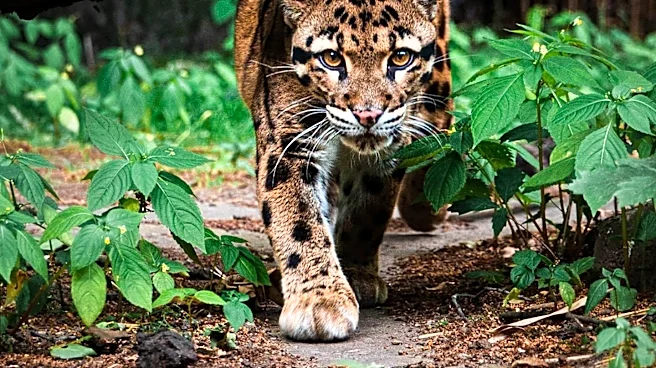
New camera trap footage has captured the oldest-known Sunda clouded leopard, an 8.5-year-old female, in the rainforests of Borneo. This elusive wild cat, known for its ghost-like presence, is rarely seen and carries the largest canine teeth relative to
body size among wild cats. The study, conducted by Panthera in partnership with indigenous communities and local wildlife departments, provides new insights into the leopard's mobility and behavior. The research highlights the importance of community involvement in wildlife conservation and the challenges of protecting such elusive species.
Why It's Important?
The documentation of the oldest-known Sunda clouded leopard offers valuable data for conservationists working to protect this vulnerable species. Understanding the leopard's behavior and habitat needs is crucial for developing effective conservation strategies. The study also emphasizes the role of indigenous communities in wildlife conservation, showcasing how local knowledge and involvement can enhance research efforts. Protecting the Sunda clouded leopard is vital for maintaining biodiversity and ecological balance in the rainforests of Borneo and Sumatra.
What's Next?
Conservation efforts will likely focus on protecting the habitats of the Sunda clouded leopard and addressing threats such as poaching and habitat loss. Continued collaboration with indigenous communities will be essential for monitoring and safeguarding these elusive cats. Further research may explore the leopard's ecological role and interactions with other species, contributing to broader conservation goals in the region. International support and funding could enhance these efforts, ensuring the long-term survival of the Sunda clouded leopard.