





What's Happening?
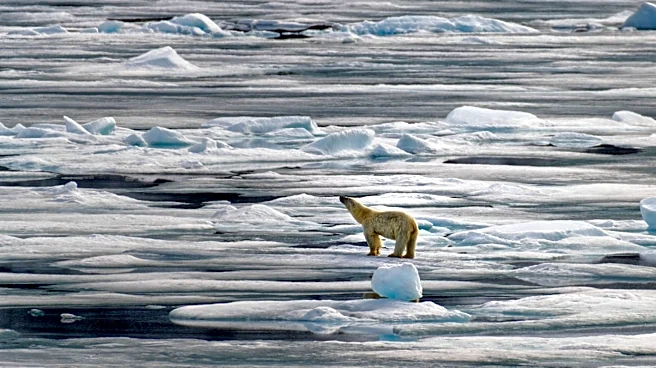
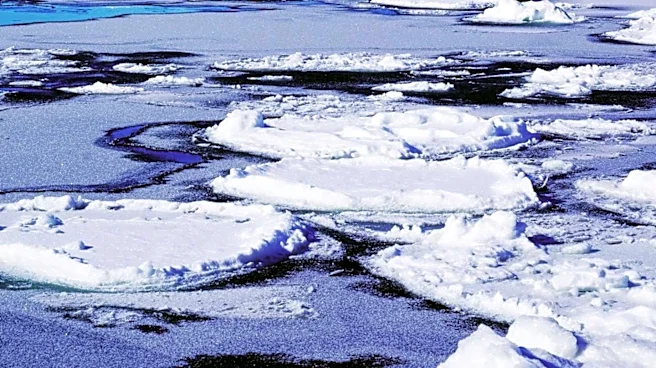
Recent studies have revealed a significant decline in Arctic sea ice during the winter peak phase, marking the largest year-to-year drop since satellite records began in 1978. The University of Southampton and the National Oceanography Centre conducted
an analysis showing that the sea ice extent fell by 5.8% between 2024 and 2025. Although there was a slight recovery in 2026, the extent remained the second lowest on record. This decline is attributed to long-term global warming trends, with scientists warning that Arctic winter sea ice is likely to continue fluctuating at lower levels.
Why It's Important?
The decline in Arctic sea ice is a critical indicator of climate change, affecting global weather patterns and ecosystems. The loss of sea ice allows more ocean heat and moisture to enter the atmosphere, potentially altering pressure patterns and storm development. This can have far-reaching impacts on weather systems, agriculture, and economies worldwide. The findings emphasize the urgent need for climate action to mitigate the effects of global warming and protect vulnerable regions like the Arctic.