







What's Happening?
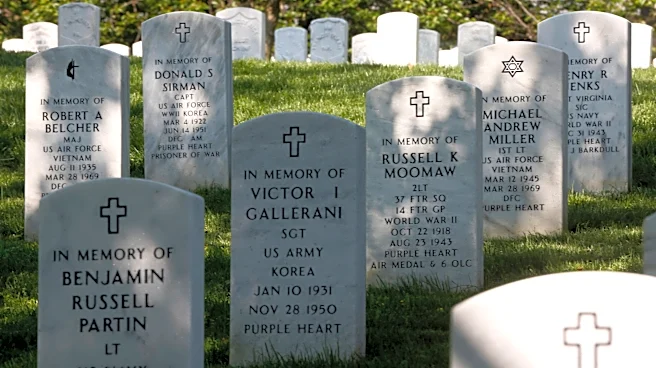
The Department of Defense has significantly reduced the number of recognized religious affiliation categories from 211 to 31. This marks the first major reduction in nearly a decade, revising a policy established in 2017 during President Trump's first term.
The update, outlined in a memo by Anthony Tata, the Under Secretary of Defense for Personnel and Readiness, aims to streamline the collection of religious preferences to enhance targeted religious support for service members. The revised list includes major faith traditions such as Buddhism, Hinduism, Islam, Judaism, Sikhism, and Mormonism, along with several Christian denominations. However, atheism and several smaller categories like Deists, Druids, and Wiccans have been removed. The original expansion of faith codes was intended to standardize and better identify religious preferences within the military.
Why It's Important?
This reduction in recognized religious categories is significant as it reflects a shift in how the Department of Defense approaches religious diversity and support within the military. By streamlining the list, the department aims to provide more efficient and targeted support to service members, potentially improving the delivery of religious services. However, the removal of certain categories may raise concerns about inclusivity and representation for those whose affiliations are no longer recognized. This decision could impact the morale and spiritual well-being of service members who identify with the removed categories, highlighting the ongoing challenge of balancing administrative efficiency with the diverse religious needs of military personnel.