








What's Happening?
Researchers from the University of Massachusetts Amherst have developed a machine learning model to identify chemical compounds that can penetrate the outer membrane of Mycobacterium tuberculosis (Mtb), the bacterium responsible for tuberculosis (TB).
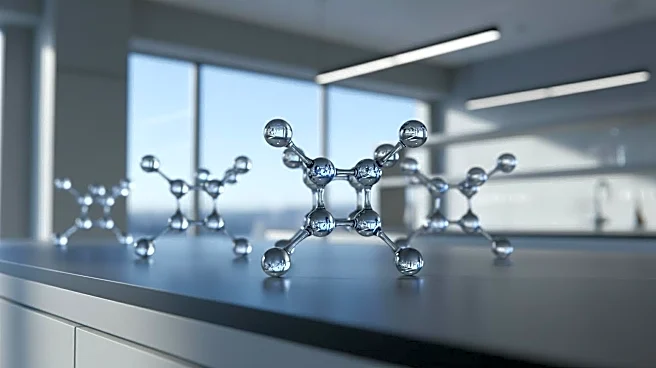
The study, published in Nature Microbiology, highlights the challenges posed by Mtb's unique outer membrane, which makes it difficult for drugs to effectively treat the disease. The researchers used a method called Peptidoglycan Accessibility Click-Mediated AssessmeNt (PAC-MAN) to test compounds and developed the Mycobacterial Permeability neural Network (MycoPermeNet) to predict compound uptake based on chemical structure. This approach aims to improve drug discovery for TB treatment.
Why It's Important?
Tuberculosis remains one of the deadliest infectious diseases globally, with significant challenges in treatment due to the bacterium's resistant outer membrane. The development of the MycoPermeNet model represents a significant advancement in identifying effective drugs for TB by predicting which compounds can penetrate the mycomembrane. This research could accelerate the discovery of new TB treatments, potentially reducing the global burden of the disease. The use of AI and machine learning in drug discovery exemplifies the growing role of technology in addressing complex medical challenges, offering hope for more efficient and targeted therapeutic development.
What's Next?
The findings from this study could lead to further research and development of new TB drugs that are more effective in penetrating the mycomembrane. Pharmaceutical companies may leverage the MycoPermeNet model to screen potential compounds, expediting the drug discovery process. Additionally, the approach could be adapted to other bacterial infections with similar membrane challenges, broadening its impact on infectious disease treatment. Collaboration between computational biologists, chemists, and pharmaceutical researchers will be crucial in translating these findings into clinical applications, ultimately improving patient outcomes in TB and other infectious diseases.