







What's Happening?
Many Russians who emigrated to the United States following the onset of the war in Ukraine have been forced to rebuild their lives and careers from scratch. These individuals, often with professional backgrounds in Russia, have found themselves adapting
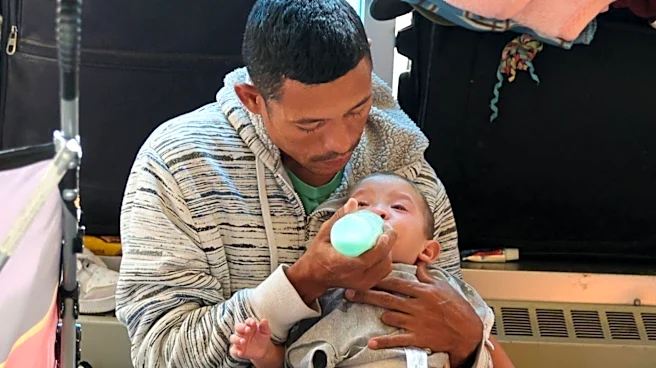
to new professions and overcoming significant challenges, including language barriers, bureaucratic hurdles, and financial instability. For instance, Mikhail Tkachevsky, a former bar manager in Moscow, transitioned to a career as a photographer in New York after struggling to find work in the U.S. bar industry. Similarly, Alexander Balashov, a former photographer and brand manager from Kemerovo, became a handyman in Seattle after seeking political asylum and enduring immigration detention. These stories highlight the drastic shifts in lifestyle and career paths experienced by those displaced by the conflict.
Why It's Important?
The experiences of these Russian emigrants in the U.S. underscore the profound human impact of international conflicts and political instability. Their stories illustrate the resilience required to adapt to entirely new environments and professions, often under immense personal and financial strain. For the U.S., this influx of individuals, while small in number, contributes to the diverse labor force and cultural landscape. Their entrepreneurial spirit, as seen in Tkachevsky's photography business and Balashov's handyman services, demonstrates how new arrivals can fill economic niches and contribute to local economies. However, their struggles also highlight potential gaps in support systems for asylum seekers and immigrants, particularly regarding professional integration and mental health services. The narrative also subtly touches upon the broader geopolitical context, as their displacement is directly linked to the war in Ukraine and the political climate in Russia.
What's Next?
As these emigrants continue to establish their lives in the U.S., the next steps involve further integration into American society and economy. For individuals like Tkachevsky and Balashov, this means growing their new businesses, expanding their client bases, and potentially seeking more formal certifications or education to enhance their professional standing. The ongoing process of obtaining permanent residency or citizenship will also be a critical factor, influencing their long-term stability and opportunities. Additionally, their experiences may inform policy discussions around immigration, asylum processes, and support for displaced populations. The success and challenges faced by these individuals could also inspire or deter future emigrants, shaping migration patterns and the demographics of Russian-speaking communities in the U.S.
Beyond the Headlines
The stories of these Russian emigrants reveal deeper implications beyond their immediate career changes. They highlight the psychological toll of forced migration, including the loss of established social networks, cultural identity, and professional status. The need to 'reinvent' oneself in a new country often leads to unexpected personal growth and the discovery of new talents, as seen in Balashov's embrace of manual labor despite an engineering degree. Furthermore, their narratives touch upon the complexities of political asylum, the challenges of navigating the U.S. immigration system, and the importance of community support, even from fellow emigrants. The ethical dimension of leaving one's home country due to political repression or war, and the subsequent search for safety and opportunity, is a central theme, reflecting universal human desires for freedom and stability.