







What's Happening?
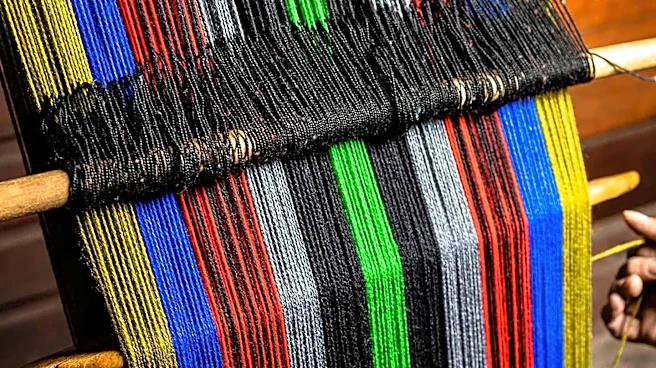
In Shannan, Tibet, the Ethnic Huaji Handwoven Cooperative is working to preserve the traditional craft of weaving Pulu, a woolen fabric that has been a staple on the Tibetan plateau for centuries. Founded in 2008 by Tibetan artisan Pasang, the cooperative
employs over 100 local residents, including individuals with disabilities, and focuses on teaching younger generations the art of weaving. The cooperative specializes in Zeter, a finer variety of Pulu made from soft wool sourced from the necks and backs of sheep. This craft, recognized as part of China's national intangible cultural heritage, was historically presented as a tribute to the Chinese imperial court during the Ming dynasty. The cooperative not only preserves this cultural heritage but also provides employment opportunities in the region.
Why It's Important?
The revival of the Pulu weaving tradition by the Ethnic Huaji Handwoven Cooperative is significant for several reasons. Economically, it provides jobs and skills training for local residents, including marginalized groups, thereby supporting community development. Culturally, it helps preserve a unique aspect of Tibetan heritage, ensuring that traditional crafts are not lost to modernization. The cooperative's efforts also strengthen cultural ties between Tibet and China, as the craft symbolizes historical connections between the two regions. By maintaining this tradition, the cooperative contributes to cultural diversity and heritage preservation, which are vital for sustaining cultural identity in a rapidly changing world.
What's Next?
The cooperative aims to continue expanding its reach and influence by attracting more customers from across China and potentially internationally. As interest in traditional crafts grows, there may be opportunities for the cooperative to collaborate with cultural heritage organizations and participate in exhibitions to showcase their work. Additionally, the cooperative plans to further develop its training programs to ensure that the skills and knowledge of Pulu weaving are passed down to future generations, thereby securing the craft's longevity.
Beyond the Headlines
The cooperative's work highlights broader themes of cultural preservation and economic empowerment. By focusing on traditional crafts, the cooperative not only preserves cultural heritage but also promotes sustainable economic practices. This approach can serve as a model for other regions seeking to balance cultural preservation with economic development. Furthermore, the cooperative's inclusive employment practices demonstrate the potential for traditional industries to contribute to social equity and community resilience.