





What's Happening?
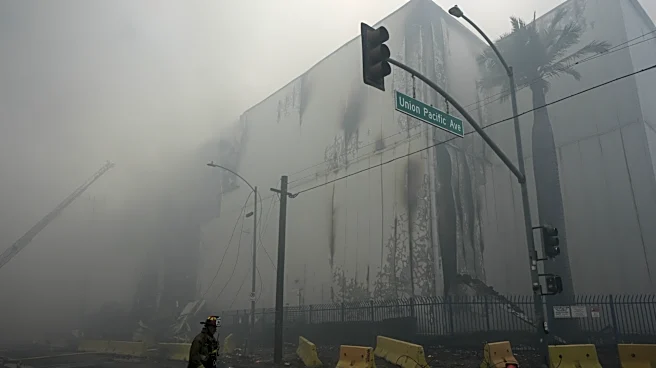
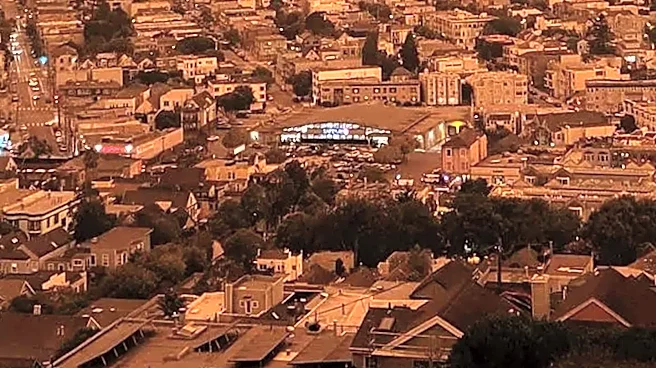
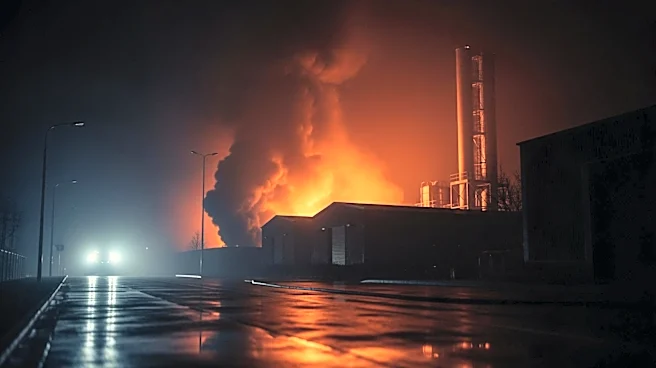
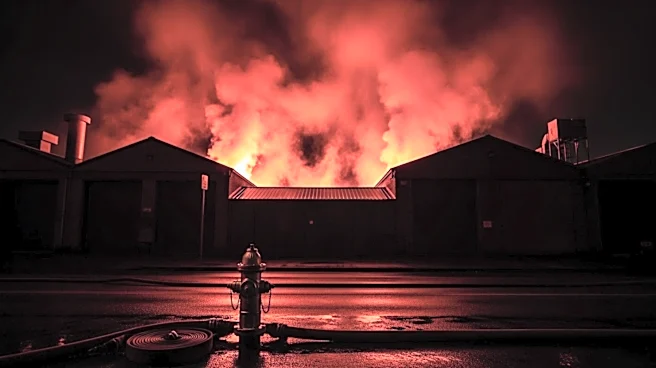
A significant spike in pollution levels was recorded overnight near a cold storage facility fire in Boyle Heights, Los Angeles. According to real-time data from the EPA's AirNow map, a temporary air sensor placed a few blocks east of the fire showed the Air Quality
Index (AQI) reaching 621 at 9 p.m. on Monday. This level is considered 'hazardous,' as it far exceeds the 300 mark. By Tuesday, the AQI at the same sensor had decreased to 66, highlighting the rapid changes in air quality due to wind patterns. Other sensors in the vicinity recorded less severe conditions, with one just west of the fire maintaining a moderate AQI of 95 throughout the week. Another sensor, located approximately 3,600 feet east of the fire, showed more volatility, peaking at an unhealthy AQI of 171. Health experts emphasize the importance of monitoring AQI levels, especially for individuals with underlying health conditions.
Why It's Important?
The dramatic increase in pollution levels poses significant health risks to residents in the affected area, particularly those with respiratory issues or other health vulnerabilities. The situation underscores the critical role of real-time air quality monitoring in protecting public health during environmental emergencies. The EPA's AirNow map provides essential data that can guide residents in making informed decisions about outdoor activities and exposure to potentially hazardous air. This incident also highlights the broader implications of industrial fires on urban air quality and the need for effective emergency response strategies to mitigate health impacts.
What's Next?
Residents are advised to stay informed about air quality levels through the AirNow Fire and Smoke Map website. Health officials recommend that individuals, especially those with health sensitivities, avoid outdoor activities and remain indoors when AQI levels are high. The EPA and local authorities will likely continue to monitor the situation closely, providing updates as conditions change. This incident may prompt discussions on improving fire safety measures and air quality monitoring systems in urban areas to better protect public health in the future.