


What's Happening?
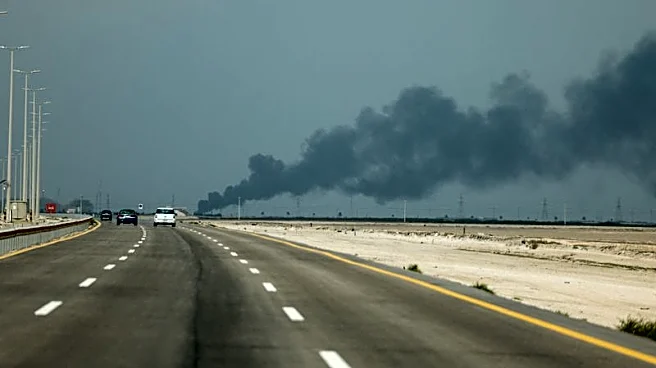
Within hours of a newly announced two-week ceasefire between the United States and Iran, missiles were launched from Iran towards Israel and several Gulf states. The ceasefire, brokered by Pakistan, was intended to open a negotiating window between U.S.
and Iranian delegations. Despite the agreement, the Israeli military reported ballistic missile attacks from Iran, with early warnings issued in central and northern parts of Israel. The United Arab Emirates activated its air defense systems to intercept incoming missiles and drones, urging the public to remain in safe places. Saudi Arabia, Kuwait, Bahrain, and Qatar also issued alerts or activated defenses in response to the threats. The ceasefire was contingent on the complete and safe opening of the Strait of Hormuz, a critical passage for global oil shipments.
Why It's Important?
The missile launches from Iran, despite the ceasefire, underscore the fragile nature of the agreement and the ongoing tensions in the region. The situation highlights the challenges in achieving lasting peace and stability in the Middle East, particularly with the strategic Strait of Hormuz at stake. The Gulf states' activation of air defenses reflects the heightened security concerns and the potential for escalation. The ceasefire was seen as a critical step towards de-escalating tensions, but the missile attacks could undermine diplomatic efforts and lead to further instability. The U.S. and Iran's ability to maintain the ceasefire and engage in productive negotiations will be crucial for regional security and global economic stability, given the region's significance in oil production and shipping.
What's Next?
The next steps involve monitoring the ceasefire's adherence and the planned negotiations between U.S. and Iranian delegations in Islamabad. The international community will be watching closely to see if the ceasefire holds and if diplomatic efforts can lead to a more permanent resolution. The response from the U.S. and its allies, as well as Iran's actions, will be critical in determining the future of the ceasefire and regional stability. The potential for further military actions or diplomatic breakthroughs will depend on the parties' willingness to compromise and address underlying issues.