



What's Happening?
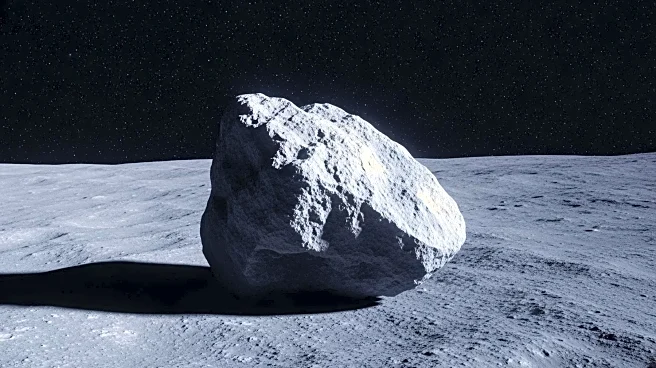
China's Chang'e-6 mission has made a groundbreaking discovery on the Moon's far side, uncovering fragments of CI chondrites, a rare type of meteorite. These meteorites are rich in water and volatile elements, offering new insights into the Moon's ancient
past and the origins of water in the Solar System. The discovery suggests that asteroids containing such materials may have bombarded the Moon and Earth more frequently than previously thought, potentially contributing to the formation of water on Earth.
Why It's Important?
The presence of CI chondrites on the Moon provides valuable information about the early Solar System and the processes that may have delivered water and other essential elements to Earth. This discovery supports the hypothesis that asteroids played a significant role in shaping the early atmosphere and hydrosphere of planetary bodies. Understanding these processes is crucial for future lunar exploration and the search for life on other planets, as it highlights the interconnected nature of celestial bodies in the Solar System.
Beyond the Headlines
The Chang'e-6 mission's findings emphasize the importance of lunar exploration in understanding the history of the Solar System. The preservation of CI chondrites on the Moon offers a unique opportunity to study ancient impact events and the materials that contributed to the development of life on Earth. This research could inform future space missions focused on resource exploration and the search for habitable environments beyond our planet.