





What's Happening?
A series of meteor sightings have been reported across the United States, with the latest event occurring on March 22. According to the American Meteor Society, a fireball was observed by hundreds of people, primarily in California, Nevada, and Arizona.
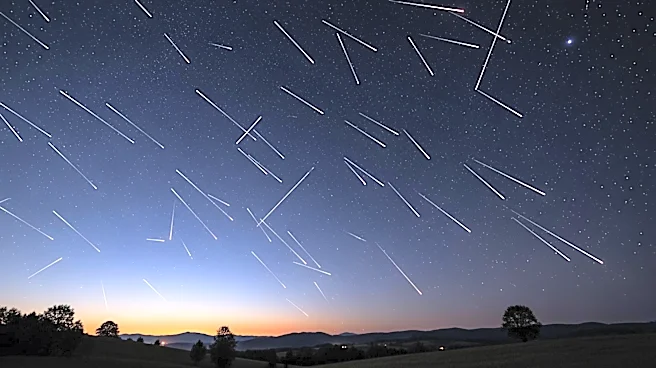
This marks the third significant meteor sighting in a week, following a loud boom in northeast Ohio on March 17 and a meteor that left debris in Texas on March 21. These meteors, often referred to as 'shooting stars,' are space rocks that burn up upon entering Earth's atmosphere, creating a bright streak of light. The recent sightings have been captured on video, showing a glowing orb with a fiery tail, and some witnesses reported a greenish-yellow glow.
Why It's Important?
The increase in meteor sightings highlights the dynamic nature of space phenomena and their impact on public interest in astronomy. These events provide opportunities for scientific observation and public engagement with space science. The sightings also underscore the importance of monitoring near-Earth objects, as meteors can occasionally cause damage if they reach the ground, as seen in Texas. The frequent occurrence of such events, even outside major meteor showers, suggests that meteors are a more common phenomenon than often perceived, though they are rarely observed in populated areas.
What's Next?
The next major meteor event is the annual Lyrid meteor shower, expected to begin in April. This will likely draw increased attention from both amateur and professional astronomers. Continued monitoring and reporting by organizations like the American Meteor Society will help track these events and provide data for scientific analysis. Public interest in meteor sightings may also lead to more educational outreach and community events focused on astronomy.
Beyond the Headlines
The fascination with meteors reflects a broader cultural interest in space exploration and the mysteries of the universe. These events can inspire educational initiatives and foster a greater appreciation for science and technology. Additionally, the study of meteors contributes to our understanding of the solar system's formation and the potential risks posed by space debris.