
What's Happening?
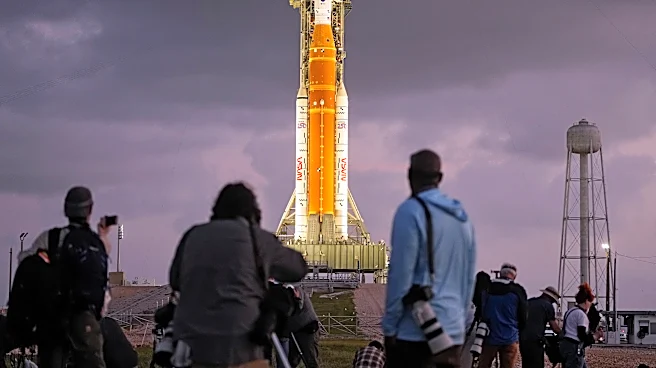
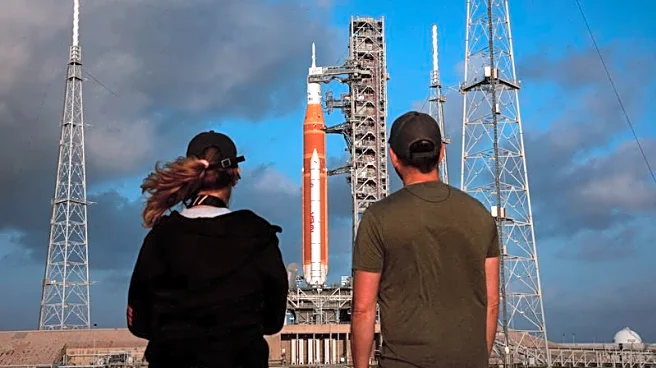
Renesas Electronics Corporation has announced that its radiation-hardened integrated circuits (ICs) are being utilized in NASA's Artemis II mission. This mission, which launched from the Kennedy Space Center in Florida on April 1, 2026, marks the first
crewed mission around the moon in decades. The Artemis II mission aims to take humans farther from Earth than they have traveled in over fifty years. During the mission, four astronauts aboard NASA's Orion spacecraft will test spacecraft systems and crew performance in a deep-space environment. The mission is a significant step in NASA's plans to return humans to the moon and establish a long-term presence on the lunar surface. Renesas' rad-hard ICs are embedded in the Orion capsule and Space Launch System (SLS) rocket, playing a crucial role in regulating power, maintaining signal integrity, and supporting onboard computing.
Why It's Important?
The involvement of Renesas Electronics in the Artemis II mission underscores the critical role of advanced semiconductor solutions in space exploration. The use of radiation-hardened ICs is essential for ensuring the reliability and safety of spacecraft systems in the harsh conditions of space. This mission not only represents a technological milestone but also a strategic step towards re-establishing human presence on the moon. The success of Artemis II could pave the way for future lunar landings and long-term exploration missions, potentially leading to new scientific discoveries and advancements in space technology. For Renesas, this collaboration highlights its position as a key player in the space industry, capable of providing high-reliability solutions for mission-critical applications.
What's Next?
Following the Artemis II mission, NASA plans to continue its Artemis program with subsequent missions aimed at landing humans on the moon and establishing a sustainable presence. The success of Artemis II will be crucial in validating the spacecraft's capabilities and informing the design and execution of future missions. Renesas Electronics is likely to continue its involvement in these missions, providing essential technology to support NASA's ambitious goals. The outcomes of these missions could influence future space policy and international collaboration in space exploration.