




What's Happening?
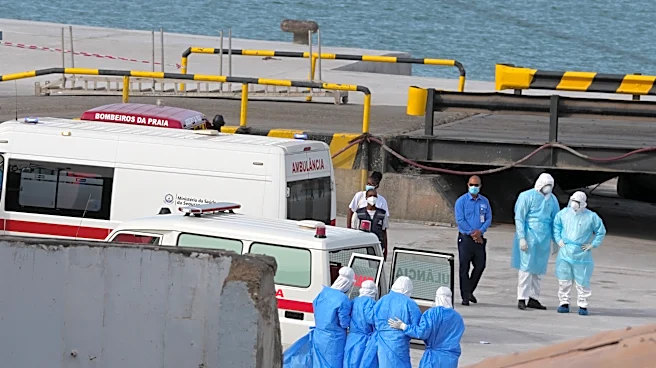
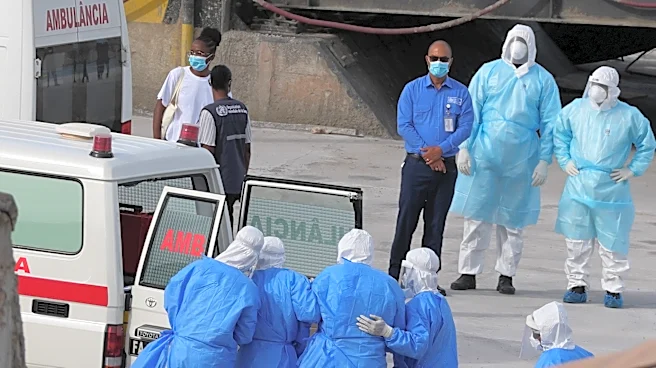
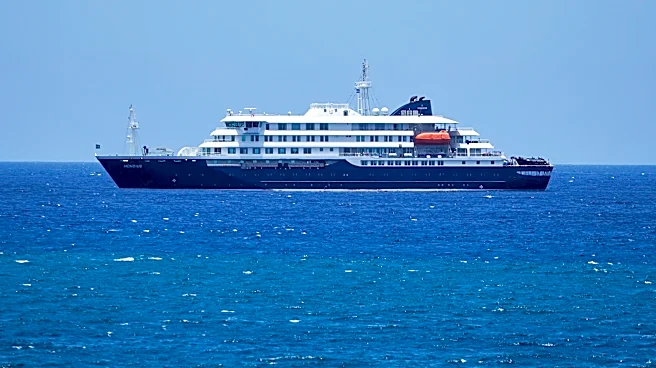
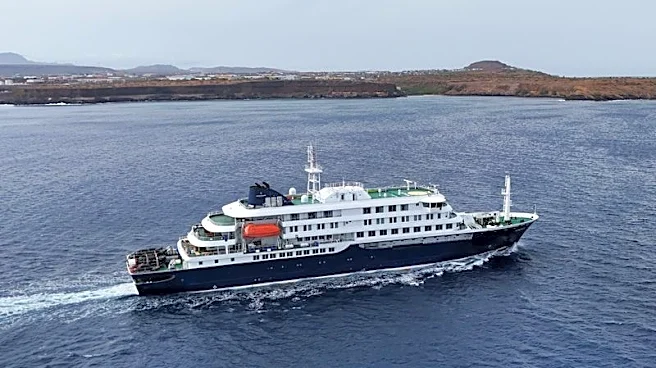
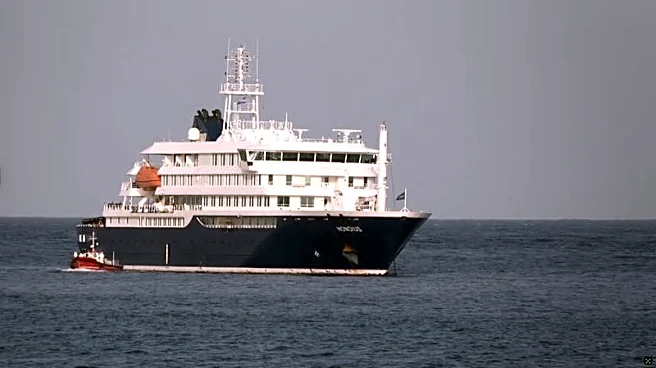
A cruise ship, MV Hondius, experienced a hantavirus outbreak, resulting in the disembarkation of about 40 passengers on the remote island of St. Helena. The outbreak has been linked to a birdwatching expedition in Argentina. Dutch officials reported that
a Dutch woman disembarked with her deceased husband's body at St. Helena and later died in South Africa. Authorities are tracing contacts of passengers who left the ship. A Swiss man tested positive for hantavirus after disembarking at St. Helena. Three passengers have died, and several others are ill. The ship's doctor and two others were evacuated for treatment in Europe.
Why It's Important?
The hantavirus outbreak on the MV Hondius highlights the risks associated with international travel and the spread of infectious diseases. The incident underscores the importance of rapid response and contact tracing to prevent further transmission. The outbreak could impact the cruise industry, raising concerns about health and safety protocols. It also emphasizes the need for international cooperation in managing public health crises, as multiple countries are involved in tracing and treating affected individuals. The situation may lead to increased scrutiny of travel-related health risks and the implementation of stricter health measures on cruise ships.
What's Next?
Authorities in South Africa and Europe are actively tracing contacts of passengers who disembarked at St. Helena. The ship is expected to dock in Tenerife, where remaining passengers will be assessed. British nationals onboard may be repatriated if they remain symptom-free. The situation requires ongoing monitoring to prevent further spread of the virus. Health agencies may issue new guidelines for cruise ships to enhance disease prevention measures. The incident could prompt a review of international travel health protocols, particularly for regions with known disease outbreaks.