

What's Happening?
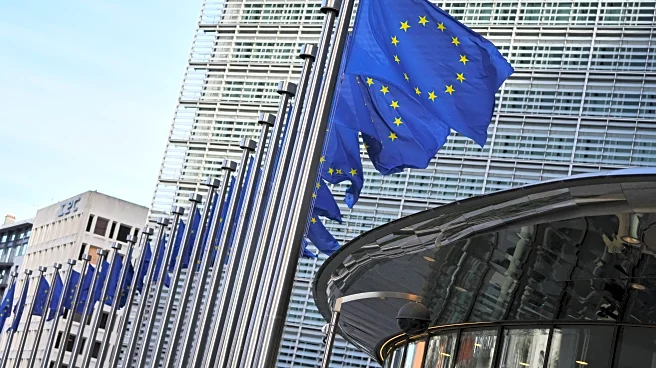
The European Union and the Mercosur bloc, comprising South American countries, have signed a significant free trade agreement after more than 25 years of negotiations. The agreement was formalized in Asunción, Paraguay, and is seen as a major geopolitical
win for the EU, especially in the context of rising global protectionism and trade tensions. The deal aims to create one of the world's largest free trade zones, encompassing over 700 million consumers and accounting for a quarter of the global GDP. European Commission President Ursula von der Leyen emphasized the agreement's importance, stating it represents a choice for fair trade over tariffs and a long-term partnership over isolation. The agreement is expected to enhance commercial ties by eliminating over 90% of tariffs on goods and services between the EU and Mercosur markets, although some tariffs will be phased out over 10-15 years. Key agricultural products like beef will be subject to strict quotas to address European farmers' concerns.
Why It's Important?
This agreement is crucial as it strengthens the EU's economic ties with South America, a region rich in resources and strategically significant amid the influence of the U.S. and China. By securing this deal, the EU expands its market access and diversifies its trade relationships, which is vital in an era marked by American tariffs and increasing Chinese exports. The agreement also highlights the EU's commitment to free trade, countering the global trend towards protectionism. For Mercosur countries, the deal provides greater access to European markets, particularly for agricultural goods, which could boost their economies. However, the agreement faces opposition from protectionist lobbies, especially European farmers concerned about competition from South American imports.
What's Next?
The next step for the agreement is ratification by the European Parliament, which could face challenges from protectionist groups. European farmers, particularly in countries like France, have expressed concerns about the potential impact of South American agricultural imports on their livelihoods. The deal includes safeguard measures and quotas to mitigate these concerns, but opposition remains. The ratification process will be closely watched, as it will determine the agreement's implementation and its potential to reshape trade dynamics between Europe and South America.
Beyond the Headlines
The agreement could have long-term implications for global trade patterns, as it represents a shift towards more diversified and resilient trade partnerships. It also underscores the EU's strategic pivot in response to geopolitical pressures from the U.S. and China. The deal may encourage other regions to pursue similar agreements, potentially leading to a more interconnected global economy. Additionally, the agreement's focus on fair trade and partnership could set a precedent for future trade negotiations, emphasizing the importance of balancing economic interests with social and environmental considerations.