

What's Happening?
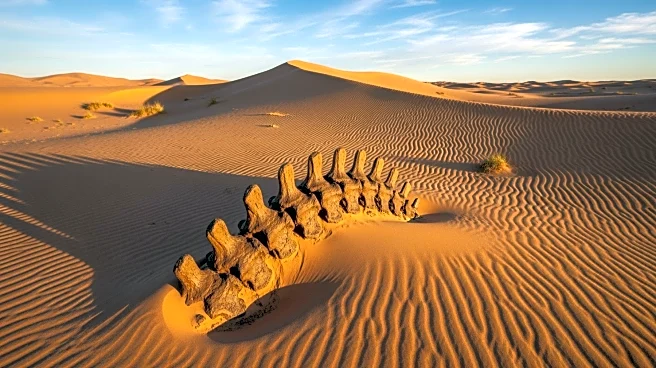
Paleontologists have discovered a new species of Spinosaurus, named Spinosaurus mirabilis, during an excavation in Niger's Sahara Desert. The discovery was made by a team led by National Geographic Explorer Paul Sereno and paleontologist Daniel Vidal
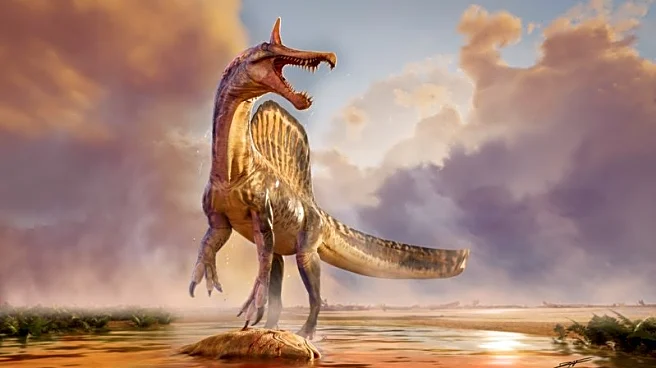
from the University of Chicago. The new species, which lived approximately 95 million years ago, features a unique sword-like crest on its skull, adding to the ongoing debate about the lifestyle and hunting methods of Spinosaurus. The site, known as Jenguebi, yielded bones from three individuals of the new species, along with other dinosaur fossils, suggesting a rich prehistoric ecosystem. The findings were published in the journal Science, highlighting the Spinosaurus' peculiar adaptations, such as interlocking teeth and a sail-backed body, which have puzzled scientists regarding its aquatic capabilities.
Why It's Important?
The discovery of Spinosaurus mirabilis is significant as it contributes to the understanding of dinosaur evolution and behavior, particularly in aquatic environments. The unique adaptations of Spinosaurus, such as its interlocking teeth and sail-backed body, challenge traditional views of dinosaurs as strictly terrestrial creatures. This finding could reshape theories about dinosaur ecology and their ability to adapt to different environments. The debate over whether Spinosaurus was a wading predator or a more aquatic hunter has implications for understanding the diversity of dinosaur species and their ecological niches. The discovery also underscores the importance of paleontological research in remote areas, which can yield new insights into prehistoric life.
What's Next?
Further research and excavation are expected to continue in the Sahara Desert to uncover more fossils that could provide additional insights into the Spinosaurus' lifestyle. Paleontologists aim to find more complete skeletons to better understand the anatomy and behavior of this species. The ongoing debate among scientists about the Spinosaurus' aquatic capabilities is likely to persist until more evidence is gathered. Future studies may focus on comparing the new species with other Spinosaurus fossils to determine variations in behavior and habitat preferences. Additionally, researchers are exploring other potential sites in Africa and beyond to discover more about the evolutionary history of Spinosaurus and its relatives.
Beyond the Headlines
The discovery of Spinosaurus mirabilis raises questions about the evolutionary pressures that led to its unique adaptations. The presence of a sword-like crest and interlocking teeth suggests that these features may have played a role in mating displays or territorial disputes, similar to modern birds. The debate over the Spinosaurus' aquatic abilities also touches on broader themes in paleontology, such as the challenges of reconstructing behavior from fossil evidence. The findings highlight the dynamic nature of scientific inquiry, where new discoveries can challenge established theories and lead to revised interpretations of prehistoric life.