




What's Happening?
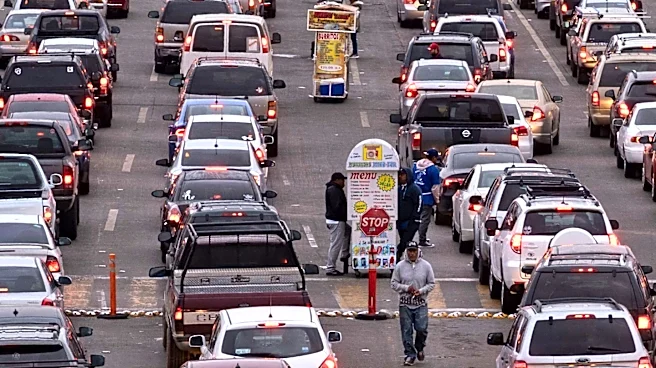
A new proposal suggests implementing crossing fees on commercial trucks and individuals crossing the U.S.-Mexico border to fund a 'fix-it fund' for addressing border pollution in San Diego County. Mark Blakey of Bonita argues that those who benefit from
crossing the border, whether for cheaper living, business, or entertainment, also contribute to the pollution crisis, particularly through living, working, and commuting in and out of Mexico. The proposal calls for Congress to authorize these fees, which would apply to the estimated 50 million people-crossings per year. This initiative aims to provide a dedicated funding source to combat the persistent environmental issues stemming from cross-border activities, which have been a long-standing challenge for the region.
Why It's Important?
This proposal addresses a critical and ongoing environmental crisis affecting the U.S.-Mexico border region, particularly San Diego. Border pollution has significant public health and ecological consequences, impacting local communities and ecosystems. By suggesting a direct funding mechanism tied to border crossings, the proposal aims to create a sustainable revenue stream for environmental remediation efforts, potentially reducing the burden on existing public funds. It also introduces a 'polluter pays' principle, suggesting that those who contribute to the problem should help finance its solution. If implemented, this could set a precedent for how border regions manage environmental impacts associated with high volumes of cross-border traffic. The success of such a fund could lead to improved water quality, air quality, and overall environmental health in the affected areas, benefiting residents and local industries.
What's Next?
The next step for this proposal would involve gaining traction in Congress to authorize the implementation of crossing fees. This would likely entail legislative debate, public hearings, and engagement with various stakeholders, including border communities, commercial trucking associations, environmental groups, and government agencies. If authorized, the establishment of a county 'fix-it fund' would require detailed planning for its administration, allocation of resources, and oversight to ensure transparency and effectiveness. Potential reactions from major stakeholders could include opposition from those who would bear the cost of the fees, such as commercial businesses and frequent crossers, while environmental advocates and local residents suffering from pollution might support the measure. The feasibility of collecting and managing such fees, as well as their potential impact on cross-border trade and tourism, would also need to be thoroughly assessed.
Beyond the Headlines
This proposal touches upon deeper issues of shared responsibility and environmental justice in transboundary regions. It highlights the economic and social interconnectedness of border communities, where activities on one side can have direct environmental consequences on the other. The idea of user fees for environmental remediation raises questions about the equitable distribution of costs and benefits, and the role of government in mitigating cross-border externalities. Furthermore, it underscores the challenges of addressing environmental problems that transcend national jurisdictions, often requiring bilateral cooperation and innovative funding solutions. The long-term implications could include a re-evaluation of existing border management policies to incorporate environmental sustainability more explicitly, and potentially inspire similar funding models for other transboundary environmental issues along the U.S. border.