
What's Happening?
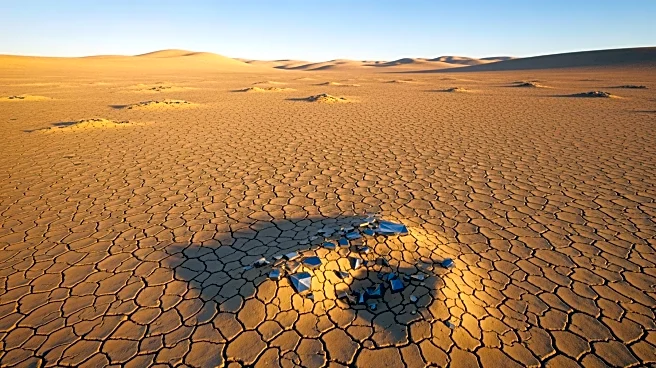
The search for a massive meteorite, known as the 'iron of God,' in the Sahara Desert has been ongoing for over a century. The story began in 1916 when French army captain Gaston Ripert claimed to have
discovered a colossal block of iron in the desert near Chinguetti, Mauritania. Despite numerous expeditions and scientific investigations, including recent efforts by twin brothers Robert and Stephen Warren, the meteorite has not been found. The Warrens utilized modern technology, such as magnetometers and satellite data, to search for the meteorite but concluded that it does not exist in the area described by Ripert. The meteorite's existence remains a mystery, with some scientists questioning the accuracy of Ripert's account.
Why It's Important?
The search for the 'iron of God' has captivated scientists and adventurers for decades due to its potential significance. If found, the meteorite would be the largest known on Earth, providing valuable insights into the history of our solar system. The continued interest in this mystery highlights the allure of scientific exploration and the quest for understanding the natural world. The story also underscores the challenges of verifying historical accounts and the limitations of scientific methods in solving long-standing mysteries. The search has involved significant resources and efforts, reflecting the broader human drive to uncover the unknown.
What's Next?
While the recent findings suggest the meteorite may not exist as described, the story is unlikely to end here. The allure of the 'iron of God' may continue to inspire future expeditions and research. Scientists may explore alternative explanations for Ripert's account or investigate other potential sites. The mystery remains a topic of interest in the scientific community, and new technologies or methodologies could eventually provide more definitive answers. The story serves as a reminder of the enduring nature of scientific inquiry and the potential for new discoveries.
Beyond the Headlines
The search for the 'iron of God' raises questions about the reliability of historical narratives and the role of scientific evidence in validating such stories. It also highlights the cultural and historical significance of meteorites, which have been revered and studied across civilizations. The story reflects broader themes of exploration, curiosity, and the human desire to connect with the cosmos. The ongoing interest in this mystery illustrates the intersection of science, history, and mythology, and the ways in which they shape our understanding of the world.