


What's Happening?
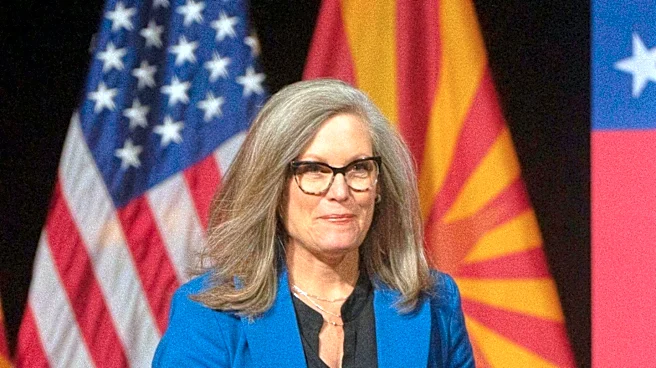
Arizona Attorney General Kris Mayes has announced that state prosecutors will not file criminal charges against Governor Katie Hobbs regarding allegations of a pay-to-play scheme. The accusations stemmed from claims that Governor Hobbs provided preferential
treatment to Sunshine Residential Homes, a group home company, after it contributed $100,000 to her inaugural celebration. The Arizona Republic reported that Sunshine Residential Homes received a 30% payment increase from the state, making it one of only two companies to receive such an increase during the 2022-2023 contracting period. Governor Hobbs has consistently denied any wrongdoing, stating she was not involved in the decision-making process for the rate increase. Attorney General Mayes, a Democrat like Governor Hobbs, stated that the investigation did not uncover sufficient evidence of a 'quid pro quo' to support a bribery charge. However, Mayes emphasized the need for legislative reform to enhance transparency regarding political donations from state contractors. A separate investigation by Republican Maricopa County Attorney Rachel Mitchell and the state auditor general is still ongoing.
Why It's Important?
This decision by the Arizona Attorney General carries significant political and ethical implications for Arizona. While Governor Hobbs has been cleared of criminal charges, the ongoing scrutiny from a separate investigation and the Attorney General's call for legislative reform highlight persistent concerns about transparency in political donations and state contracting. The allegations have already become a 'political millstone' for Governor Hobbs, with her Republican opponent, U.S. Rep. Andy Biggs, using the investigation in campaign ads as she seeks a second term. The situation underscores the challenges of maintaining public trust when large political contributions coincide with favorable state actions for donors. The Attorney General's recommendation for legislative reform suggests a broader recognition of potential vulnerabilities in the current system, where the appearance of impropriety can erode public confidence, even in the absence of criminal intent. This case could spur future legislative efforts to tighten regulations on campaign finance and contractor donations in Arizona, aiming to prevent similar controversies.
What's Next?
The immediate next step involves the continuation of the separate investigation being conducted by Republican Maricopa County Attorney Rachel Mitchell and the state auditor general. The timeline for the completion of this investigation and its potential findings remain unclear, and it could still pose further challenges for Governor Hobbs. Attorney General Mayes has urged Governor Hobbs and the GOP-controlled Legislature to adopt improvements in legislative reform concerning the transparency of political donations made by state contractors. This call for reform indicates that the issue of 'pay-to-play' allegations, even without criminal charges, will likely remain a topic of discussion and potential legislative action in Arizona. Stakeholders, including political leaders, advocacy groups, and the public, will be watching closely to see if any new legislation is proposed or enacted to address the transparency concerns raised by this case. The political ramifications for Governor Hobbs's re-election campaign will also continue to unfold as the remaining investigation progresses.
Beyond the Headlines
Beyond the immediate political and legal outcomes, this case highlights a deeper societal concern regarding the influence of money in politics and the perception of fairness in government contracting. The Attorney General's statement, while clearing Governor Hobbs of criminal intent, explicitly called for legislative reform to address the transparency of political donations from state contractors. This suggests that even if actions are not illegal, they can still create an environment where public trust is compromised. The incident also brings to light the ethical dilemmas faced by public officials when campaign contributions from entities that benefit from state contracts create an appearance of conflict of interest. The case could serve as a catalyst for a broader discussion on campaign finance ethics and the need for stricter regulations to ensure that government decisions are perceived as being made solely in the public interest, rather than influenced by financial contributions. This could lead to a re-evaluation of existing laws and practices to prevent future situations that, while not criminal, can still undermine public confidence in governmental integrity.