









What's Happening?
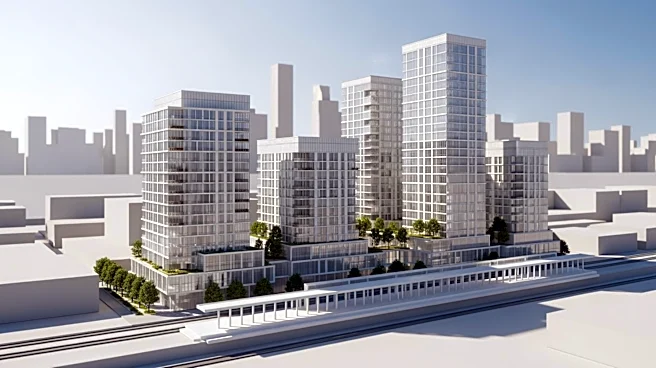
California's Senate Bill 79, set to take effect on July 1, aims to increase housing density near transit stops by allowing taller apartment buildings. The law is intended to address the state's housing shortage by creating up to a million new apartments
and condominiums. However, critics argue that the law primarily benefits developers, as it mandates only a small percentage of units for low-income residents. Concerns have been raised about the impact on existing infrastructure, such as schools and emergency services, in neighborhoods like Century City. Proponents believe the law will help reduce car dependency by promoting transit-oriented development.
Why It's Important?
The implementation of SB 79 highlights the ongoing tension between urban development and community impact in California. While the law seeks to alleviate the housing crisis, it raises questions about equitable development and the adequacy of existing infrastructure to support increased density. The debate underscores the challenges of balancing growth with community needs, particularly in urban areas. The outcome of this legislation could set a precedent for other states grappling with similar housing issues, influencing future urban planning and policy decisions across the U.S.
What's Next?
As SB 79 takes effect, stakeholders will closely monitor its impact on housing availability and community dynamics. Local governments may need to address infrastructure concerns, such as school capacity and emergency services, to accommodate increased population density. The law's implementation could prompt further legislative action to ensure that development benefits are more evenly distributed among residents. Community groups and housing advocates are likely to continue pushing for policies that prioritize affordable housing and sustainable urban growth.