






What's Happening?
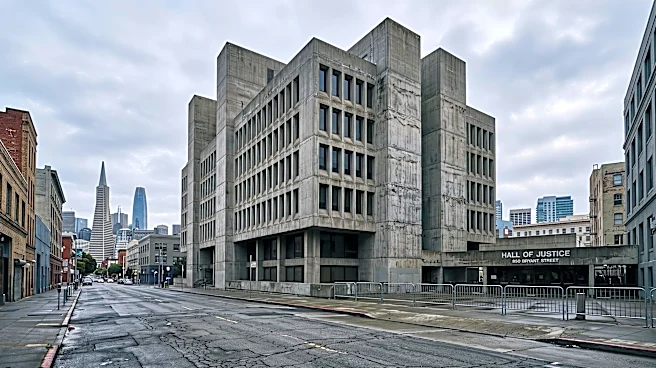
San Francisco city officials are deliberating the future of the aging Hall of Justice at 850 Bryant St., which has been deemed seismically unsafe since 1992. Options under consideration include demolishing the building or relocating court operations to
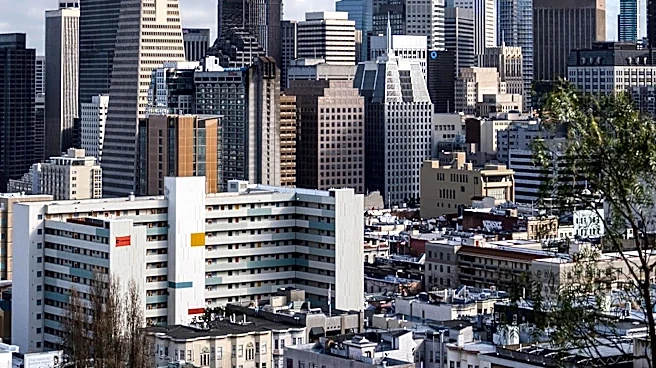
another existing commercial property. The building, completed in 1960, has seen a steady exodus of tenants, with the San Francisco Police Department moving out in 2015 and the District Attorney's Office in 2017. Current District Attorney Brooke Jenkins described past conditions as unsafe, citing issues like mice, asbestos, and liquid leaks from the ceiling. The Superior Court is now the primary tenant, occupying 23% of the structure. Infrastructure within the building is visibly deteriorating, with only one of four main elevators operational during a recent tour, and many fixtures showing signs of age and disrepair. Four feasibility studies have been conducted since 2008, with the latest, by Skidmore, Owings and Merrill, exploring the repurposing of commercial buildings like 50 U.N. Plaza or 1455 Market as alternatives.
Why It's Important?
The decision regarding the Hall of Justice carries significant implications for public safety, city operations, and urban planning in San Francisco. The building's continued use despite its seismic vulnerability poses a risk to employees and the public. The dispersal of city departments, such as the Medical Examiner and SFPD, has already created operational inefficiencies, hindering cohesive investigative efforts. Relocating court operations or demolishing the building would necessitate substantial financial investment and logistical planning. The debate also touches upon broader city planning philosophies, including the potential for adaptive reuse of existing commercial spaces versus new construction. Furthermore, the discussion around jail facilities, which were once part of the Hall of Justice, highlights ongoing challenges with overcrowding in current city jails and past missed opportunities for state funding for modern facilities, reflecting evolving public demands for accountability in addressing crime.
What's Next?
The future of the Hall of Justice remains uncertain, contingent on securing state and local funding and the city's willingness to proceed with a long-debated solution. Officials have indicated that any future project would not include a jail, a decision rooted in a 2015 rejection of an $80 million state grant for a new jail at the site. The city will need to decide whether to purchase or lease a replacement building, with 50 U.N. Plaza and 1455 Market identified as potential candidates. The ongoing overcrowding in San Francisco's two existing jails, coupled with increased public demand for addressing crime, may influence future discussions on correctional facility needs. Stakeholders, including city supervisors, legal departments, and public safety advocates, will likely continue to engage in the debate as funding and logistical plans are developed.
Beyond the Headlines
The situation with the Hall of Justice reflects a broader challenge faced by many older urban centers: how to manage aging infrastructure that no longer meets modern safety standards or operational needs. The building's history, from its initial construction to its current state of disrepair, symbolizes shifts in urban development, criminal justice philosophies, and public safety priorities. The debate over whether to demolish or repurpose highlights the tension between preserving historical structures and ensuring public safety and efficiency. The past rejection of state funding for a new jail also underscores evolving societal views on incarceration and the preference for alternative solutions, such as mental health and drug treatment centers, which San Francisco has since begun to implement. This case could serve as a precedent for how other cities address similar issues with their own outdated public buildings, balancing fiscal responsibility with community needs and safety.