








What's Happening?
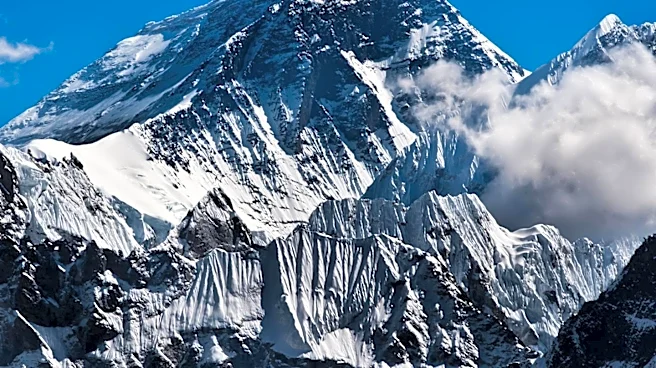
Indian authorities are planning a high-risk operation to recover the body of a climber known as 'Green Boots' from Mount Everest, nearly 30 years after his death. The Indo-Tibetan Border Police is seeking bids from high-altitude recovery agencies for
the mission, which aims to retrieve the remains from the mountain's northern slope and bring them to Delhi by October. The operation is considered highly dangerous, with Tshiring Jangbu Sherpa, a seasoned climber, noting it could take a 10-person team up to a week to complete. The body, long believed to be that of Tsewang Paljor, has been identified through DNA testing as Indian soldier Dorje Morup.
Why It's Important?
The planned recovery mission highlights the ongoing challenges and risks associated with climbing Mount Everest, where over 200 bodies remain due to the dangers and costs of retrieval. The operation underscores the commitment to bringing closure to families of deceased climbers, despite the significant risks involved. It also raises ethical questions within the mountaineering community about the balance between respecting the deceased and ensuring the safety of living climbers. Successful recovery could set a precedent for future missions, potentially influencing policies on handling climbers' remains on Everest.
What's Next?
The recovery mission is expected to face logistical and environmental challenges, with weather conditions on Everest posing significant obstacles. The operation's success will depend on careful planning and execution by experienced climbers and recovery teams. If successful, the mission could lead to further efforts to recover other bodies from the mountain, prompting discussions on the feasibility and ethics of such operations. The outcome may also influence future regulations and guidelines for climbers and expedition organizers regarding safety and recovery protocols.