










What's Happening?
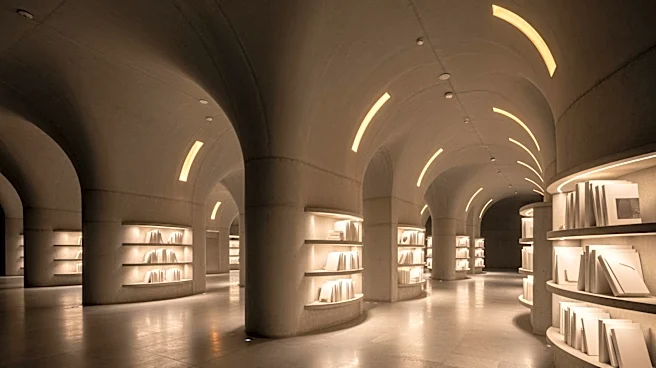
The Museum of Old and New Art (Mona) in Hobart, Tasmania, has unveiled its new library, Phrontisterion, which houses a collection of 30,000 books. The library, part of a $100 million expansion, includes rare items such as a Shakespeare First Folio and David
Bowie's handwritten lyrics. The library eschews traditional classification systems like Dewey, opting instead for a more fluid organization where books can be placed anywhere and still be located via a custom app. This approach aims to make the library more accessible and less intimidating to visitors. The library also features digital innovations, such as animated versions of rare books, enhancing the visitor experience.
Why It's Important?
The opening of Phrontisterion represents a significant investment in cultural and educational infrastructure, highlighting the importance of libraries as spaces for public engagement and learning. By rejecting traditional classification systems, Mona challenges the Eurocentric norms of library science, potentially influencing future library designs. The inclusion of digital technology to enhance accessibility and interaction with rare texts could set a precedent for other institutions. This development underscores the evolving role of libraries in society, not just as repositories of knowledge but as dynamic spaces for cultural exchange and innovation.
What's Next?
As Phrontisterion opens to the public, it will be interesting to observe how visitors interact with the unconventional library setup. The success of this model could inspire other cultural institutions to adopt similar approaches, potentially leading to a broader reevaluation of how libraries are organized and accessed. Additionally, the integration of digital technology in the library experience may prompt further innovations in how rare and valuable texts are preserved and presented to the public.
Beyond the Headlines
The decision to move away from the Dewey Decimal System reflects broader cultural shifts towards inclusivity and diversity in educational spaces. By creating a library that is more accessible and less hierarchical, Mona is making a statement about the democratization of knowledge. This approach could have long-term implications for how educational and cultural institutions engage with their audiences, emphasizing the importance of adaptability and user-centered design in public spaces.