





What's Happening?
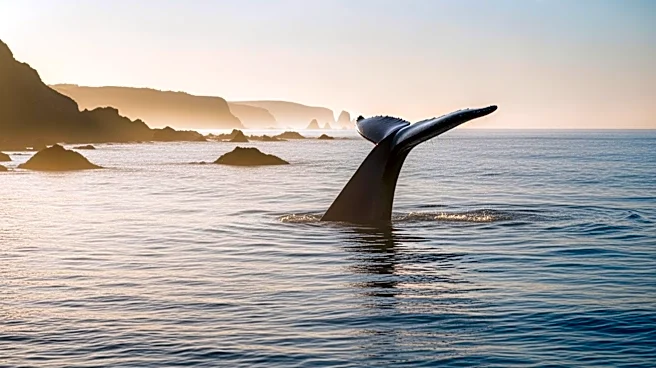
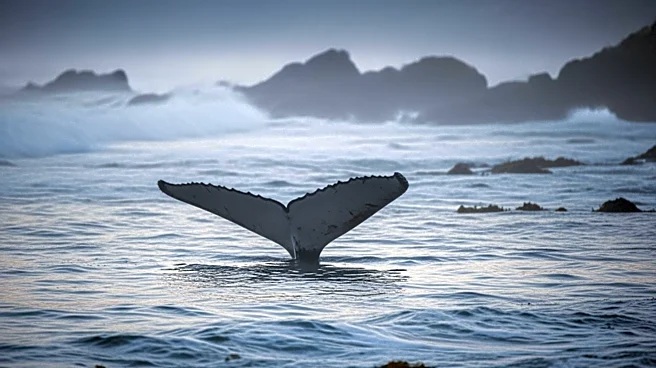
Efforts to rescue a humpback whale, affectionately named 'Timmy' by the German public, have faced setbacks as the whale continues to struggle off Germany's Baltic Sea coast. Initially stranded on a sandbank near the island of Poel, Timmy managed to swim
free but soon became stuck again. Rescuers, including local authorities and entrepreneurs, have been working to free the whale using inflatable cushions and pontoons, aiming to transport it back to the North Sea or the Atlantic Ocean. Despite the challenges, the whale's ability to swim away suggests it remains relatively healthy, providing hope for a successful rescue.
Why It's Important?
The situation with Timmy the whale has captured public attention, highlighting the challenges of wildlife rescue operations. It underscores the importance of coordinated efforts between local authorities, environmental groups, and the public in addressing wildlife emergencies. The case also raises awareness about the environmental conditions that lead to such strandings, prompting discussions on marine conservation and the impact of human activities on marine life. Successful rescue efforts could serve as a model for future operations, emphasizing the need for innovative solutions and collaboration in wildlife conservation.
What's Next?
Rescue teams are preparing for another attempt to free Timmy, with plans to use specialized equipment to lift and transport the whale. The situation remains fluid, with environmental conditions and the whale's health influencing the rescue strategy. Continued public interest and media coverage are expected, potentially leading to increased support for marine conservation initiatives. The outcome of this rescue effort could influence future policies and practices in wildlife management and emergency response.