







What's Happening?
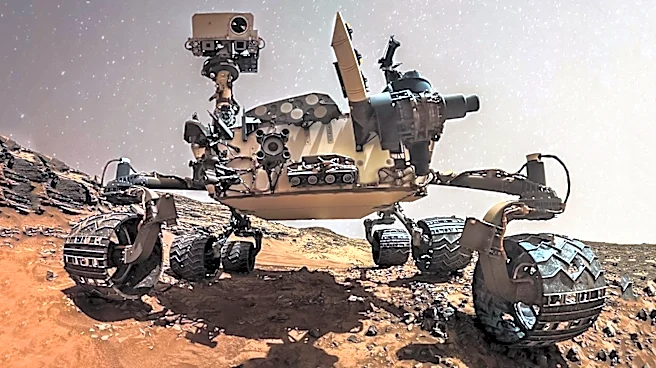
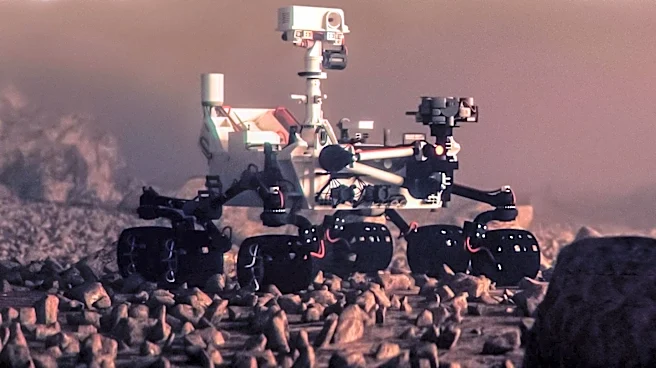
NASA's Curiosity rover has discovered evidence of an ancient sandstorm on Mars, marking the first time climbing wind ripple strata have been identified on the planet. The discovery was made at a site called 'Jawbone Canyon' and involves multilayered rocks
formed by intense sandstorm activity billions of years ago. These findings were captured by Curiosity on December 12, 2024, and have been detailed in a paper featured on the cover of the journal Geology. The sandstorm's intensity was such that it caused sand ripples to climb over each other, eventually hardening into rock formations. This discovery provides a rare glimpse into the dynamic weather patterns of early Martian history.
Why It's Important?
The discovery of climbing wind ripple strata on Mars is significant as it offers new insights into the planet's geological and atmospheric history. Understanding ancient weather patterns on Mars can help scientists reconstruct the planet's past climate and assess its habitability. This information is crucial for future Mars exploration missions, as it can inform landing site selections and the search for signs of past life. Additionally, studying Martian geology enhances our understanding of planetary processes, which can be applied to Earth and other celestial bodies. The findings also contribute to the broader field of astrobiology by providing context for the environmental conditions that may have supported life on Mars.