






What's Happening?
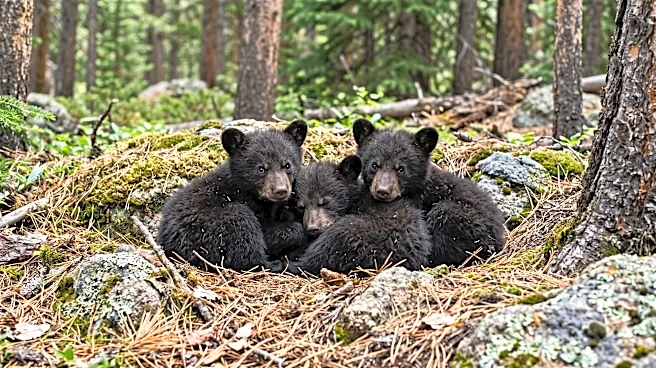
A wildlife rehabilitation facility in Colorado is currently caring for more than 30 orphaned black bear cubs, a significant increase attributed partly to the state's ongoing drought. Nanci Limbach, founder and executive director of the Pauline S. Schneegas
Wildlife Foundation, described this as one of the busiest years for the organization. The early freeze and dry conditions have depleted natural food sources like berries and acorns, and water scarcity has forced bears closer to human settlements and the Colorado River corridor in search of sustenance. This has led to a rise in human-bear conflicts, including a dozen bear attacks reported by Colorado Parks and Wildlife (CPW) this year, though none were fatal. CPW policy often mandates euthanizing bears involved in attacks.
Why It's Important?
The surge in orphaned bear cubs and human-bear conflicts in Colorado underscores the severe impact of climate change and drought on wildlife populations and human communities. As bears are driven into new areas in search of food and water, the risk of dangerous encounters increases, posing a threat to both human safety and bear conservation. The financial and logistical strain on wildlife rehabilitation centers like the Pauline S. Schneegas Wildlife Foundation highlights the broader societal cost of environmental degradation. Furthermore, the CPW policy of euthanizing bears involved in attacks raises ethical considerations regarding wildlife management, balancing public safety with the preservation of species, especially when environmental factors are significant contributors to the conflicts.
What's Next?
Wildlife officials are urging residents to be 'Bear Aware' as bears continue to seek food in preparation for hibernation, which requires full-grown black bears to consume approximately 20,000 calories daily. Recommended safety measures include securing food, garbage, and recycling, and removing bird feeders when bears are active. The Pauline S. Schneegas Wildlife Foundation faces the ongoing challenge of feeding the numerous cubs, requiring about 2,000 pounds of fruit and 1,000 pounds of high-quality dog food weekly. Many of the bears at the facility are being transported to a satellite location for hibernation. In early February, the foundation, in collaboration with CPW, plans to wake the bears and release them deep into the woods, aiming to return them to their natural habitat.
Beyond the Headlines
The situation in Colorado reveals a deeper narrative about ecological resilience and human responsibility in the face of environmental shifts. The drought-induced scarcity of natural resources not only impacts wildlife directly but also alters their behavior, pushing them into closer proximity with human populations. This necessitates a re-evaluation of land use, conservation strategies, and public education to foster a more harmonious coexistence. The increased number of orphaned cubs also points to potential long-term impacts on bear population dynamics and genetic diversity. Addressing these issues requires not just immediate responses to conflicts but also sustainable environmental policies that mitigate climate change effects and protect critical wildlife habitats, ensuring the health of both ecosystems and communities.