


What's Happening?
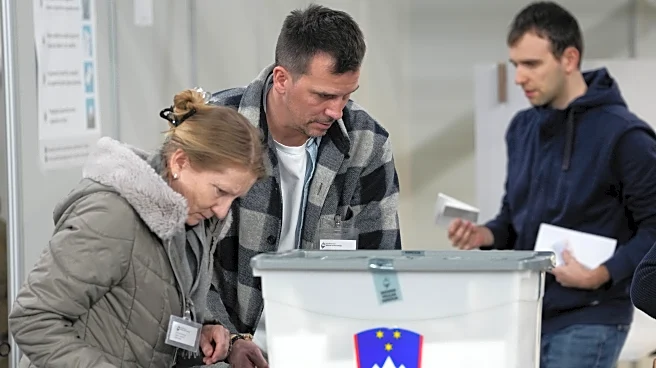
Danish voters participated in a general election on March 24, 2026, with Prime Minister Mette Frederiksen seeking a third term. The election followed a period of tension with the U.S. over President Trump's interest in Greenland, a semiautonomous Danish territory.
Despite the previous crisis, the election campaign focused more on domestic issues such as the cost of living and potential wealth taxes. The results were indecisive, with neither the left-leaning nor right-leaning blocs securing a majority in the Folketing, Denmark's parliament. This outcome leaves the future of Frederiksen's leadership uncertain, as her Social Democrats lost ground compared to the 2022 election.
Why It's Important?
The election's outcome is significant as it reflects the shifting political landscape in Denmark, a key member of the European Union and NATO. The indecisive results highlight the challenges faced by Frederiksen's government, particularly in maintaining support amidst rising living costs and economic concerns. The role of Lars Løkke Rasmussen, leader of the centrist Moderate party, becomes crucial as he may influence the formation of the next government. The election also underscores the diminishing impact of the Greenland issue on Danish politics, as domestic economic issues took precedence during the campaign.
What's Next?
With no clear majority, coalition negotiations are expected to follow, involving key political figures like Lars Løkke Rasmussen. The formation of a new government will require compromises from both left and right factions. The outcome of these negotiations will determine whether Frederiksen can continue as Prime Minister or if a new leader will emerge. The political uncertainty may impact Denmark's domestic and foreign policies, including its stance on EU and NATO matters.