





What's Happening?
The Iowa Board of Regents has approved Iowa State University's proposal to terminate 11 academic programs. These programs were identified as underenrolled during an alignment review last November, meaning they had fewer than 25 undergraduate students
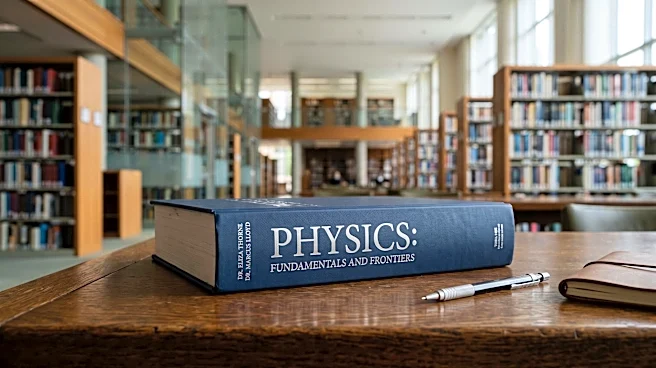
and less than 10 graduate students. Among the terminated programs are several physics specialties (Applied Physics, Astrophysics, Condensed Matter Physics, High Energy Physics, Nuclear Physics) at the master's and doctoral levels, which will now be consolidated into a single physics degree option. The Energy Systems Engineering master's program and the Environmental Studies bachelor's program were also cut. While most terminations are expected to reduce administrative and advising loads, the Energy Systems Engineering program's termination is anticipated to result in revenue loss and impact Iowa's workforce, as it supported students from local companies.
Why It's Important?
The termination of these programs reflects a strategic effort by Iowa State University, approved by the Board of Regents, to streamline administration, improve efficiency, and reduce costs. While some cuts, like the physics specialties, aim to consolidate and simplify degree offerings, others, such as Energy Systems Engineering, raise concerns about potential workforce impacts. The loss of specialists in energy security could affect Iowa-based companies and utility providers, highlighting a tension between administrative efficiency and specialized workforce needs. This decision underscores the ongoing challenges universities face in balancing academic offerings with enrollment trends, financial sustainability, and regional economic demands.
What's Next?
Following the termination of these programs, Iowa State University will continue to offer core and specialty physics classes, integrating them into a single degree option to streamline administrative burdens. For the Energy Systems Engineering program, future efforts to support energy workforce development will continue through alternative programs and interdisciplinary initiatives, though the specific details are not yet outlined. The Environmental Studies secondary major will be replaced by a focus on the growing environmental science major and sustainability minors. The university anticipates modestly reduced administrative and advising loads, which are expected to benefit the remaining programs. These changes are part of a larger university effort that includes IT centralization, which has already saved approximately $986,000.
Beyond the Headlines
The decision by the Iowa Board of Regents to terminate underenrolled programs at Iowa State University points to a broader trend in higher education where institutions are increasingly scrutinizing program viability based on enrollment and financial metrics. This can lead to difficult choices that balance academic breadth with fiscal responsibility. The specific concern about the Energy Systems Engineering program's impact on Iowa's workforce highlights the direct link between university offerings and regional economic development. Such decisions can spark debates about the value of specialized fields versus broader, more popular programs, and the role of universities in meeting both academic and societal needs. It also raises questions about how universities will adapt to ensure critical workforce skills are still developed through alternative pathways.