




What's Happening?
The California legislature has advanced several significant clean energy bills through key fiscal committees, moving them closer to final floor votes. These bills aim to address escalating state energy prices, which have doubled over the past decade,
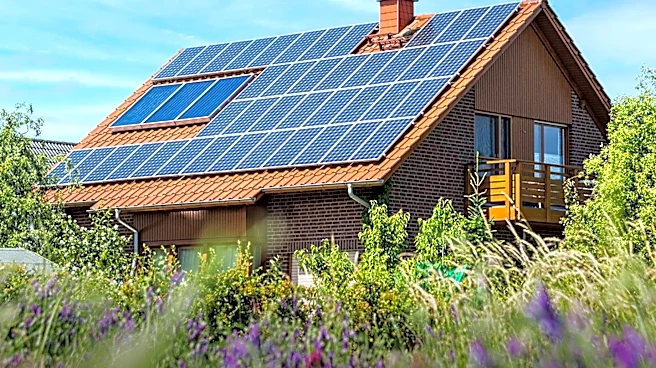
by promoting distributed generation, virtual power plants, and small-scale mobile hardware. Among the bills, Senate Bill 868, authored by Senator Scott Wiener, has passed the Assembly Appropriations Committee and is headed to the Assembly floor. This legislation streamlines regulations for plug-in balcony solar systems up to 1,200 W, allowing residents to connect small systems to standard household outlets without traditional utility interconnection applications or local permits. A single 400 W balcony system is estimated to cover approximately 14% of an average apartment's electricity usage, potentially saving about $250 annually, according to analysis from the Environmental Working Group. Additionally, Assembly Bill 1813, sponsored by Assemblymember Christopher Ward, has cleared the Senate Appropriations Committee and is moving to the Senate floor. This bill seeks to reform the state's community solar landscape by mandating regulators to value community solar and storage projects using the California Public Utilities Commission’s Avoided Cost Calculator. Two Virtual Power Plant bills, Senate Bill 913 and Senate Bill 905, authored by Senator Josh Becker, also advanced out of Assembly Appropriations. SB 913 requires the CPUC to establish a valuation framework for behind-the-meter battery storage systems that export energy to the grid during peak demand, while SB 905 introduces a grid utilization metric to identify existing capacity on distribution circuits for additional load without requiring physical grid expansion. However, Assembly Bill 1787, which would have mandated utilities to provide real-time smart meter data access to consumers, failed to pass out of the Senate Appropriations Committee.
Why It's Important?
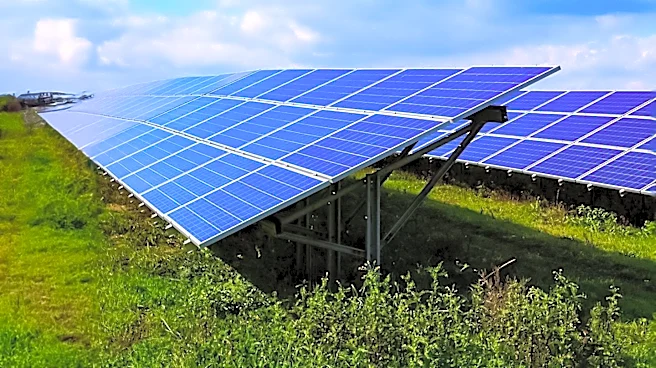
These legislative advancements are crucial for California's energy future, particularly in light of the state's rapidly increasing electricity rates. The promotion of balcony solar systems through SB 868 could significantly empower individual residents, especially those in apartments, to generate their own clean energy, reducing their utility bills and contributing to decentralized power generation. This could alleviate pressure on the centralized grid and offer a tangible solution for energy independence at a household level. AB 1813's reform of community solar valuation is vital for making these projects financially viable, potentially unlocking substantial investment in community-scale renewable energy and storage. A UCLA study highlighted that regulators previously neglected to use the Avoided Cost Calculator for community solar, hindering its development. By applying this tool, the state could see 5.4 GW of community solar and storage deployed over 20 years, generating an estimated $6.5 billion in systemwide electricity cost savings, as indicated by Aurora Energy Research. The endorsement of AB 1813 by San Diego Community Power and Peninsula Clean Energy is significant, as it counters the 'cost shift' argument often raised by investor-owned utilities, suggesting that the bill's model protects non-participating customers while lowering overall system rates. The Virtual Power Plant bills (SB 913 and SB 905) are critical for optimizing grid efficiency and integrating customer-sited battery storage into the broader energy market, ensuring that these resources are valued for their full export potential and contribute to grid stability during peak stress. The failure of AB 1787, however, represents a missed opportunity to provide consumers with real-time energy data, which is essential for informed energy management and participation in demand-side programs.
What's Next?
The advanced clean energy bills, including Senate Bill 868, Assembly Bill 1813, Senate Bill 913, and Senate Bill 905, will now proceed to final floor votes in their respective chambers. If passed, they will then head to the governor's desk for signature. The legislative process will involve further debate and potential amendments as these bills navigate their final stages. For SB 868, advocates are currently analyzing the extensive amendments it sustained in committee, which could influence its final impact. For AB 1813, the application of the California Public Utilities Commission’s Avoided Cost Calculator will remain a focal point of industry discussion, as its implementation under NEM 3.0 has drawn criticism from rooftop solar installers. The Virtual Power Plant bills will likely see continued collaboration with initiatives like the pending CAISO proposal, which aims to allow customer-sited batteries to qualify for Resource Adequacy based on their full export potential. The state's allocation of additional funding to the Demand Side Grid Support program, extending participation through the 2026 season, indicates a broader commitment to these types of solutions. The failure of AB 1787 means that the push for real-time smart meter data access for consumers will need to be revisited in future legislative sessions, potentially through new bills or amendments to existing frameworks. Stakeholders, including environmental groups, clean energy advocates, and utility companies, will closely monitor these developments, influencing the final shape and implementation of these policies.
Beyond the Headlines
The advancement of these clean energy bills in California signifies a broader shift towards decentralized and consumer-centric energy solutions, moving beyond traditional utility models. The emphasis on 'balcony solar' and community solar projects reflects a growing recognition of the potential for individual and local communities to contribute significantly to the state's energy supply and resilience. This could lead to a more democratized energy landscape, where citizens have greater control over their energy production and consumption. The integration of virtual power plants and behind-the-meter battery storage into the grid valuation framework, as proposed by SB 913 and SB 905, represents a sophisticated approach to grid management. It acknowledges that distributed energy resources are not merely passive consumers but active participants that can provide valuable services to the grid, such as peak demand reduction and grid stabilization. This paradigm shift could incentivize innovation in energy storage technologies and smart home devices, fostering a more dynamic and responsive energy ecosystem. The legislative efforts also highlight the ongoing tension between traditional utility interests and the burgeoning distributed energy sector. The 'cost shift' argument, often used by utilities to resist community solar, is being challenged by new valuation models that demonstrate systemwide benefits. This debate underscores the need for regulatory frameworks to evolve in pace with technological advancements and changing energy demands. The failure of the smart meter data access bill, AB 1787, however, points to persistent hurdles in empowering consumers with information, which is crucial for effective energy management and participation in demand response programs. This suggests that while California is making strides in clean energy policy, there are still significant barriers to achieving full transparency and consumer engagement in the energy sector.