






What's Happening?
A federal judge has issued an order compelling the Trump administration to reveal the identities of individuals involved in establishing a $1.8 billion fund. This development comes amidst a series of legal and political events, including an armed individual attacking
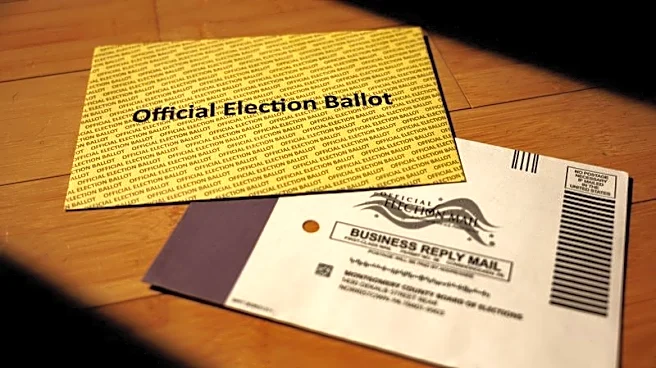
Democratic gubernatorial candidate Dr. Amy Acton in Ohio, the Maryland Supreme Court approving a Democratic redistricting plan for 2028, and the Pentagon administering polygraph tests to Joint Staff members in an effort to identify the source of leaks regarding depleted stockpiles. Additionally, the Justice Department is advocating for states to manage last-minute mail voting overhauls, seeking to overturn a block on a USPS rule concerning mail ballots. Leon Black, an associate of Jeffrey Epstein, has reportedly defied a Congressional subpoena to testify and has subsequently sued the House panel. President Trump has also appointed Adam Telle as acting Army Secretary following Driscoll’s resignation and is proceeding with the construction of a triumphal arch in Washington without prior approval.
Why It's Important?
This judicial order is significant as it aims to bring transparency to the origins and management of a substantial federal fund, potentially uncovering details about its allocation and decision-making processes within the Trump administration. The broader context of ongoing legal challenges, such as the mail ballot dispute and the Epstein inquiry, highlights a period of heightened scrutiny and accountability for government actions and political figures. The Pentagon's leak investigation underscores concerns about national security and information control, while the attack on a political candidate points to rising tensions in the political landscape. These events collectively reflect a dynamic environment where legal, political, and social forces are actively shaping governance and public trust.
What's Next?
The immediate next step will involve the Trump administration's compliance with the federal judge's order to disclose the names associated with the $1.8 billion fund. This disclosure could lead to further investigations, public scrutiny, or legal actions depending on the information revealed. In parallel, the Justice Department's appeal regarding the mail ballot rule will proceed, potentially impacting future election procedures. The ongoing Congressional inquiry into Jeffrey Epstein's associates, despite Leon Black's defiance, suggests continued efforts to uncover information related to that case. The various legal and political developments indicate a period of continued legal battles, political maneuvering, and public discourse surrounding government transparency, electoral integrity, and accountability.
Beyond the Headlines
The judge's order to reveal the names behind the $1.8 billion fund delves into the deeper implications of governmental financial oversight and the potential for opaque financial mechanisms within administrations. This situation raises questions about the ethical responsibilities of public officials and the mechanisms in place to prevent the misuse of public funds. The confluence of events, including the attack on a political candidate and the Pentagon's leak hunt, suggests a broader societal tension and a potential erosion of trust in institutions. These developments could contribute to long-term shifts in public expectations regarding government transparency, the role of the judiciary in executive oversight, and the overall political climate, potentially influencing future policy-making and public engagement.