




What's Happening?
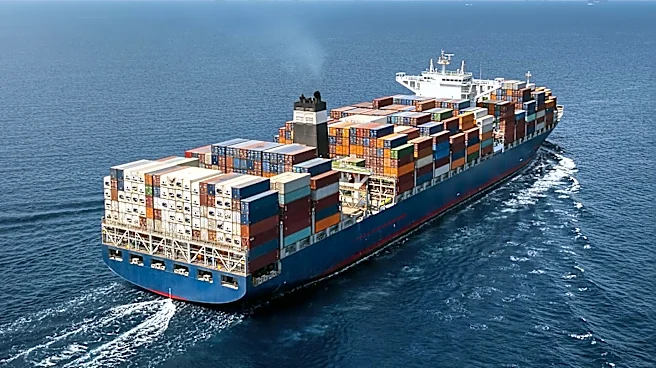
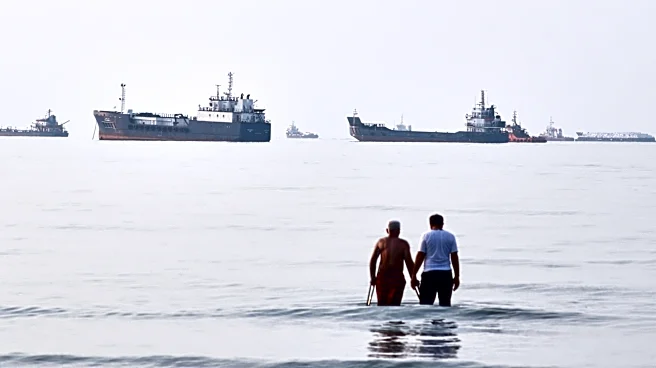
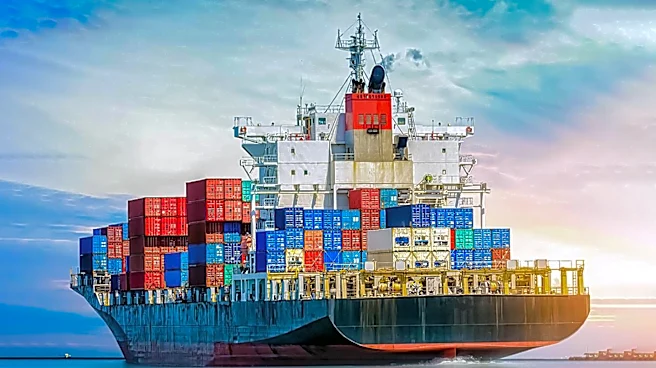
Scientists are warning of a potential ecological disaster as over 1,500 ships remain idle in the Persian Gulf and hundreds more in the Gulf of Oman due to ongoing conflicts over the Strait of Hormuz. The stalling of these ships could lead to a superspreader
event of invasive species, as marine organisms attach to the vessels and are transported to new ecosystems. The Strait of Hormuz, a critical waterway for global oil supply, has been a point of contention since the war with Iran began in February. The prolonged stationary periods of these ships increase the risk of biofouling, where microorganisms, algae, and invertebrates grow on the ships' hulls.
Why It's Important?
The potential spread of invasive species poses a significant threat to global marine ecosystems and could result in substantial economic impacts. Invasive species can disrupt local ecosystems, harm native species, and cause millions of dollars in damage to industries such as aquaculture and fisheries. The situation highlights the interconnectedness of global shipping and environmental health, emphasizing the need for stringent biosecurity measures. The ongoing conflict and its impact on shipping routes also underscore the geopolitical complexities affecting international trade and environmental management.
What's Next?
Efforts to mitigate the risk of invasive species spread may include increased regulations on ship hull cleanliness and the development of more effective anti-fouling technologies. The International Maritime Organization is likely to push for stronger biofouling regulations. Additionally, the situation may prompt further international cooperation to address the environmental and economic challenges posed by stalled shipping routes. Monitoring and early detection of invasive species will be crucial in preventing widespread ecological damage.