








What's Happening?
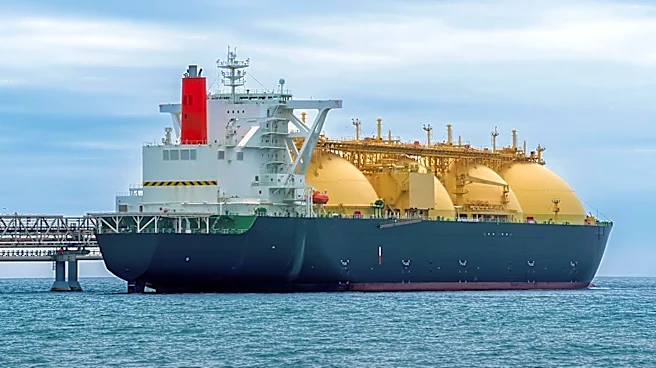
A Nigerian LNG carrier, GASLOG SALEM, has become the first LNG vessel in four months to transit the Bab el-Mandeb Strait, a critical maritime chokepoint, amid ongoing threats from Houthi rebels. The vessel delivered its cargo from Nigeria to Bangladesh
before proceeding into the Red Sea. This transit underscores the strategic challenges facing global energy trade, particularly in regions affected by geopolitical tensions. Despite this successful passage, shipping analysts caution that it does not indicate a broader return of LNG traffic through this security-challenged corridor. Recent threats from the Houthis have significantly reduced shipping traffic through the Bab el-Mandeb Strait, with vessel crossings dropping nearly 30% in a single day.
Why It's Important?
The transit of the GASLOG SALEM through the Bab el-Mandeb Strait is significant as it highlights the ongoing security risks in one of the world's most important maritime corridors. The Bab el-Mandeb Strait is a crucial passage for global energy trade, and disruptions here can have far-reaching implications for international shipping and energy markets. The recent Houthi threats have already led to a sharp decline in vessel crossings, indicating heightened risk perceptions among shipowners. This situation could lead to increased shipping costs and longer routes for Asia-bound crude cargoes, affecting global supply chains and potentially leading to higher energy prices. The incident also underscores the vulnerability of global energy infrastructure to regional conflicts and geopolitical tensions.
What's Next?
The ongoing security threats in the Red Sea region are likely to continue affecting shipping routes and decisions. Shipowners and operators may need to reassess their risk management strategies, potentially opting for longer, alternative routes to avoid the Bab el-Mandeb Strait. This could lead to increased shipping costs and demand for tankers, impacting global energy markets. Additionally, the situation may prompt international diplomatic efforts to address the security challenges in the region and ensure the safe passage of vessels. The response of major stakeholders, including governments and international organizations, will be crucial in determining the future stability of this vital maritime corridor.