
What's Happening?
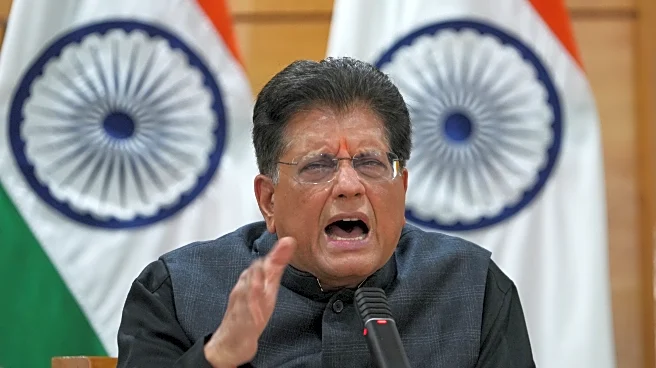
The U.S.-India trade deal remains elusive due to ongoing disputes over tariffs and agricultural market access. President Trump's imposition of punitive tariffs on Indian imports has strained relations,
with tariffs reaching up to 50% on certain goods. These tariffs are part of a broader strategy to pressure India into reducing its imports of Russian oil, which the U.S. claims undermines Western sanctions against Russia. Despite high-level meetings and negotiations, including discussions between President Trump and Indian Prime Minister Narendra Modi, significant barriers remain. The U.S. seeks greater access to India's agricultural markets, particularly for genetically modified crops and dairy products, which face strong opposition from India's domestic farm lobby. This resistance is compounded by upcoming state elections in India, where agricultural interests hold significant sway.
Why It's Important?
The stalled trade negotiations have significant implications for both countries. For the U.S., the tariffs contribute to inflationary pressures, increasing costs for consumers and businesses reliant on Indian imports. Small businesses in the U.S. are particularly affected, with some resorting to high-interest loans to manage increased costs. For India, the lack of a trade deal hampers its export-led growth strategy and affects its economic stability, with potential impacts on GDP growth and export volumes. The ongoing trade tensions also highlight the geopolitical complexities of balancing economic interests with strategic alliances, particularly in the context of U.S. efforts to counter Russian influence.
What's Next?
Future negotiations will likely focus on finding a compromise that addresses both tariff reductions and agricultural market access. The U.S. may seek to leverage India's need for energy imports as a bargaining chip, while India will need to navigate domestic political pressures to make concessions. The outcome of these negotiations could set a precedent for future trade agreements and influence global trade dynamics, particularly in the context of shifting supply chains and geopolitical alliances.
Beyond the Headlines
The trade tensions underscore the broader challenges of globalization and the interconnectedness of international markets. The situation highlights the delicate balance between protecting domestic industries and engaging in free trade. It also raises questions about the role of tariffs as a tool for achieving foreign policy objectives, particularly when they have significant domestic economic repercussions. The ongoing negotiations will test the resilience of the U.S.-India strategic partnership and could influence future trade policies in both countries.