





What's Happening?
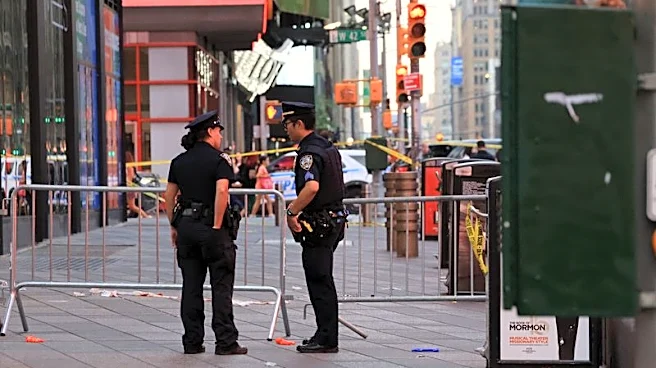
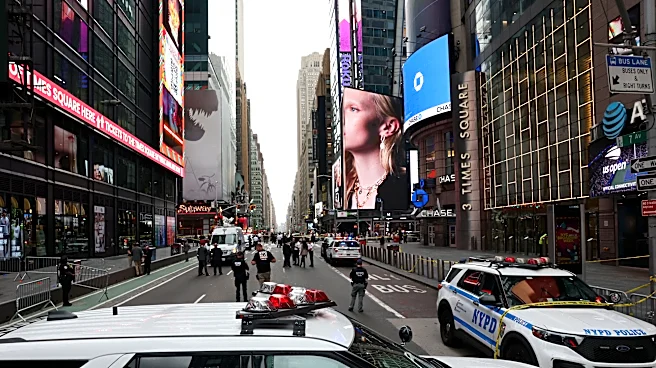
Erin Piacenti, a 32-year-old University of Pennsylvania graduate and Vice President of Business Selection and Conflicts for Bank of America, was killed in a 'random and unprovoked' stabbing incident in Times Square on Monday. Piacenti, from Chester, N.J.,
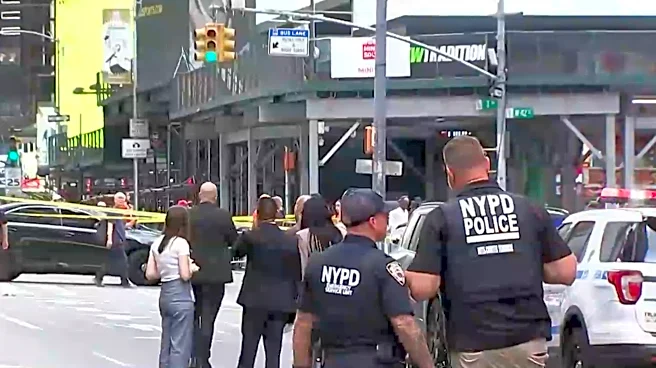
died at the hospital. Another victim, a 68-year-old man, is in critical but stable condition. The New York Police Department (NYPD) identified the suspect as 39-year-old Pamela Cisneros of Queens. According to investigators, Cisneros was threatening people with two knives near West 42nd Street and Seventh Avenue before allegedly stabbing both victims. She then fled towards an NYPD substation, where officers confronted her. Cisneros reportedly refused to drop the knives and threatened officers, leading to officers deploying tasers twice before discharging their service weapons, striking and killing her. Two knives were recovered at the scene, and Cisneros was noted to have a 'documented mental health history.'
Why It's Important?
This tragic incident in Times Square underscores significant concerns regarding public safety in major urban centers and the complex issue of mental health. The 'random and unprovoked' nature of the attack highlights the unpredictable risks faced by individuals in high-traffic areas, prompting discussions about security measures and police response protocols. The involvement of an individual with a documented mental health history in such a violent act brings to the forefront the ongoing challenges in providing adequate mental health support and intervention, particularly for those who may pose a risk to themselves or others. For the University of Pennsylvania and Bank of America communities, the loss of Erin Piacenti is a profound tragedy, emphasizing the ripple effect of such violence on professional and academic networks. The incident also raises questions about the use of force by law enforcement in situations involving individuals with mental health crises, and the need for de-escalation training and resources.
What's Next?
The NYPD will conduct an internal investigation into the incident, and body-worn camera footage from the officers involved is expected to be released to the public. This investigation will scrutinize the police response, including the use of force, and aims to provide transparency regarding the events that transpired. The Mayor's office has indicated that the incident highlights a 'big epidemic' of mental health issues, suggesting potential future discussions or initiatives aimed at addressing mental health support and crisis intervention in New York City. The families of the victims, particularly Erin Piacenti, will be grappling with their loss, and the broader community will likely continue to discuss public safety and mental health resources in the wake of this event. The legal process regarding the investigation into the officer-involved shooting will also proceed.
Beyond the Headlines
The Times Square stabbing transcends a singular criminal event, touching upon deeper societal issues. The 'random and unprovoked' nature of the attack can foster a sense of vulnerability among the public, particularly in bustling urban environments often perceived as safe. This incident reignites debates about the balance between individual liberties and public safety, especially when mental health is a contributing factor. The police response, culminating in the suspect's death, will inevitably lead to scrutiny regarding de-escalation tactics and the training of officers to handle individuals in mental health crises. This event also highlights the often-invisible struggles of those with mental health conditions and the systemic gaps in providing comprehensive care, potentially leading to tragic outcomes for both those suffering and innocent bystanders. The collective grief and calls for action following such an event often serve as catalysts for re-evaluating existing policies and community support systems.