





What's Happening?
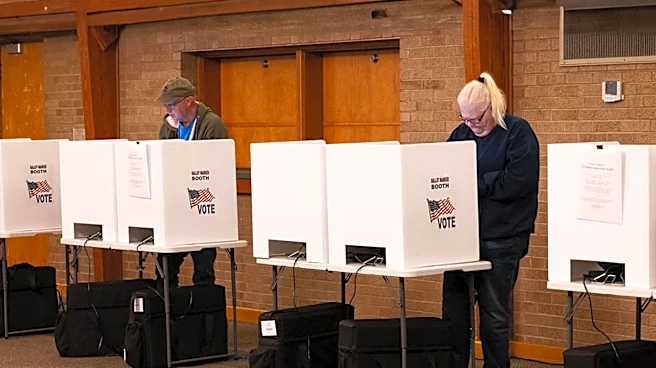
Oklahoma voters will decide on August 25 whether to amend the state constitution to include voter identification requirements, a measure known as State Question 846. Currently, voter ID laws exist in state statutes, which are easier for the legislature
to change. The proposed constitutional amendment would make it significantly more difficult to alter these requirements in the future, as any change would necessitate another statewide vote. The resolution was introduced by Oklahoma Senate leader Lonnie Paxton, R-Tuttle, and championed by Oklahoma House Speaker Kyle Hilbert, a Republican from Bristow. They argue that this move will further secure elections and reflects strong public support for voter ID, citing a 2025 Pew Research survey indicating 83% favorability nationwide. The current law defines proof of identity as a document with a name conforming to the registry, a photograph, and an expiration date (except for military IDs), issued by the U.S., Oklahoma, or a tribal government. These specific requirements would not change if the state question is adopted.
Why It's Important?
The passage of State Question 846 would have significant implications for election integrity and legislative power in Oklahoma. By embedding voter ID requirements into the state constitution, it would create a higher barrier for future legislative bodies to modify or repeal these laws. This move is seen by proponents as a way to ensure long-term election security and reflect the will of the public, given the high national approval for voter ID. However, opponents, such as Democratic state representative Mickey Dollens, argue that it is an unnecessary measure, as Oklahoma already has secure elections and a voter ID law in place. Dollens also expresses concern that placing the requirement in the constitution would grant more power to politicians to define acceptable proof of identity and make it exceedingly difficult for citizens to initiate changes through grassroots efforts, as it would require over 175,000 valid voter signatures to bring it back to a ballot for repeal. This could diminish the influence of future legislatures and citizen-led initiatives on election laws.
What's Next?
Oklahomans will cast their votes on State Question 846 on August 25. Turnout for this election is anticipated to be low compared to more prominent general and primary elections. Despite the lower expected participation, every registered voter in Oklahoma, regardless of political affiliation, is eligible to vote on this state question. If approved, the voter ID requirements will be enshrined in the state constitution, making them considerably more challenging to amend or repeal in the future. If it fails, the voter ID laws will remain in state statutes, subject to easier modification by the legislature. The outcome will determine the long-term framework for voter identification in Oklahoma and could influence similar legislative efforts in other states seeking to constitutionally protect their election laws.
Beyond the Headlines
The debate surrounding State Question 846 extends beyond the immediate issue of voter ID, touching upon fundamental questions of democratic governance and the balance of power. The effort to move a statutory requirement into the constitution highlights a broader trend in some states to insulate certain policies from ordinary legislative processes, thereby limiting the ability of future elected officials to respond to evolving societal needs or public opinion. This approach can be viewed as both a safeguard against perceived political volatility and a potential constraint on democratic responsiveness. The low expected voter turnout for this specific election also raises questions about how significant constitutional changes are enacted, particularly when they are placed on ballots during less visible election cycles. The outcome in Oklahoma could serve as a precedent or a cautionary tale for other states considering similar constitutional amendments related to election administration, influencing the ongoing national discourse on voting rights and election security.